 EN
EN
 AR
AR
 NL
NL
 FI
FI
 FR
FR
 DE
DE
 EL
EL
 HI
HI
 IT
IT
 JA
JA
 KO
KO
 PT
PT
 ES
ES
 RU
RU
 TL
TL
 ID
ID
 UK
UK
 VI
VI
 TH
TH
 HU
HU
 TR
TR
 MS
MS
 LA
LA
 BN
BN
 MN
MN
 MY
MY
 UZ
UZ
 KK
KK


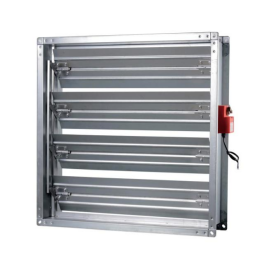
When working with Fan Filter Units (FFUs) ceiling panels must be compatible during the cleanroom design phase to ensure the necessary controlled atmosphere for sensitive manufacturing processes. One of the most important considerations is the thickness of the panels, which can have significant impact on the structural integrity and thermal performance, as well as ensuring the smooth integration of FFU systems. As a national high-tech company with full cleanroom solutions, Guangdong Huaao Clean Technology Group Co., Ltd. provides wall panels of different thicknesses to meet different applications to enhance the normal operation of the FFU effectively.
Standard Panel Thicknesses and Their Applications
The cleanroom wall panels are offered in various fixed thicknesses, suitable for different grades and usage requirements in the cleanroom. Thickness consideration depends upon temperature control requirements, pressure differential requirement, and structure requirements.
The standard panel size used in moderately temperature controlled cleanrooms (ISO Class 7-8) is 50mm. Such panels are both strong and affordable enough to be used in various manufacturing and general assembly purposes. If good temperature stability of 23-25℃, humidity of 55-58%, is needed in the dust-free room, the panel with the insulating rock wool or honeycomb paper is the best choice.
For controlled environments having more rigorous temperature requirements, e.g. 23°C ± 1°C and 50% ± 5% humidity, 75mm panels are recommended. This added thickness also gives improved thermal insulation and rigidity properties which can enhance more critical clean room cleanliness applications.
Cleanrooms where the temperature tolerance is +/- 0.5°C, and humidity tolerance is 45% +/- 3%, require 100mm panels. Usually such panels are made with a higher amount of insulation or double panels to ensure that it has environmental stability.
For extreme applications with temperature range 23°C ± 0.1°C, and humidity of 40% ± 2%, they used 120mm to 150mm panels. The panels feature higher thickness insulation and stronger structure that support optimum environmental conditions.
How Panel Thickness Affects FFU Performance
The thickness of cleanroom wall panels directly influences the performance of FFU systems in several ways.
Having satisfactory structural support is very important to ensure the integrity of the cleanroom envelope. Most usually these are installed onto the ceiling frames in the ceiling grid and on the wall panels. Thicker panels ensure more load bearing to maintain the stability of the ceiling grid, and make sure the FFUs are properly aligned. This is true especially when an array of high density FFU filters or high load filter cases are used in a clean room.
Thermal insulation plays a role in making the HVAC system of the cleanroom efficient. Thicker panels and insulating cores also reduce the heat transfer between the cleanroom and other nearby spaces, reducing the cooling/heating requirement for the FFU system. This energy efficiency not only helps in keeping FFUs running consistently, but lowers running costs.
It is very important to have airtightness to ensure the pressure differentials that drive airflow from the FFUs though the workspace. Thick panels with strong sealing systems make sure that there's less chance for air to escape unintentionally, which means that the performance of the FFU is less likely to get impacted. In cleanrooms where panel deflection may happen when pressurized, thicker panels will provide more stiffness to ensure the integrity of the sealed envelope.
Thickness is the key factor in determining performance characteristics along with the core material of wall panels. Owning different core materials, they have different levels of insulation, fire resistance and structural strength.
Panel Core Materials and Thickness Selection
Thickness is the key factor in determining performance characteristics along with the core material of wall panels. Owning different core materials, they have different levels of insulation, fire resistance and structural strength.
Rock wool cores have superb fire resistance and thermal insulation properties. Rock wool panels can be installed in cleanrooms that have high fire safety requirements and are available in thicknesses ranging from 50mm to 120mm. Rock wool is fireproof and will not break down if the temperature exceeds 650°C, and is very suitable for the pharmaceutical and healthcare cleanroom.
Polyurethane foam cores are a high-strength form of thermal insulation. These cores have good strength-to-weight ratios with dimensional stability which gives consistent FFU performance.
The lightweight and cost-effective honeycomb paper cores are ideal for lower grade cleanrooms that aren't as stringent in terms of structure or fire rating.
Additionally, panel deflection and sealing may be influenced by the air pressure differential that is expected in the cleanroom when choosing the thickness; for the most part, thicker panels can withstand higher air pressures from the cleanroom. Thicker panels may be needed for higher pressure applications.
Integration with FFU Systems and Installation Considerations
Integration with FFU Systems and installation considerations. Careful coordination in both design and installation processes are crucial to ensuring proper integration of wall panels with FFU systems. At the boundary of the wall panels and the FFU ceiling grid the joint between panels and grid must be sealed correctly to prevent air leakage and control air pressure. Panels need to be positioned accurately for proper placement of the ceiling grid and FFUs.
Any penetrations that may be necessary for electrical conduit, piping or monitoring equipment shall be filled in with compatible materials that keep the integrity of the panel and its performance of the FFU. Ensure seal of all edges and joints with suitable gaskets / sealants to form a continuous air barrier. Using pre-cut panels and pre-installed sealing systems can make very much earlier the traditional installation easier.
The modular concept of Huaao's panel systems allows for efficient installation with precision for FFU integration. Thickeners range from 50mm-150mm to accommodate a wide range of cleanroom needs.
Conclusion
The thickness of cleanroom wall panels plays a vital role in FFU compatibility and influences the structural support, thermal insulation, air tightness, and overall cleanroom capabilities. Choosing the right panel thickness determines how well the facilities operate, depending on the cleanroom classification, temperature and pressure requirements. Guangdong Huaao Clean Technology Group Co., Ltd. have a full line of wall panel offering various thicknesses and core materials for different FFU applications. Contact us today to explore your cleanroom needs and find out how our panels can improve your FFU system's performance.
