 EN
EN
 AR
AR
 NL
NL
 FI
FI
 FR
FR
 DE
DE
 EL
EL
 HI
HI
 IT
IT
 JA
JA
 KO
KO
 PT
PT
 ES
ES
 RU
RU
 TL
TL
 ID
ID
 UK
UK
 VI
VI
 TH
TH
 HU
HU
 TR
TR
 MS
MS
 LA
LA
 BN
BN
 MN
MN
 MY
MY
 UZ
UZ
 KK
KK


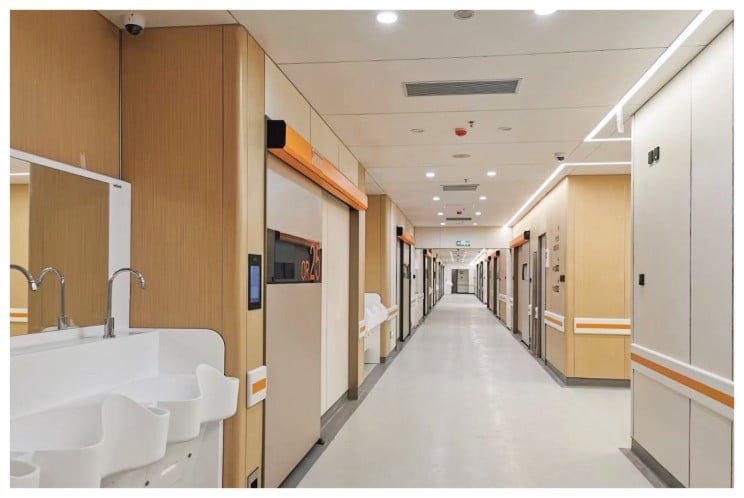
The principle applications of FFUs are to prevent airborne contamination in critical areas such as pharmaceutical factories, semiconductor factories, hospital, etc., where HEPA and ULPA Fan Filter Units are the most effective solution. However, the best FFU in the world isn't going to keep a cleanroom clean, unless it has the proper enclosure. The filtered air should not bypass or become contaminated with the workspace; therefore wall panels play an important role in helping the FFU perform. Guangdong Huaao Clean Technology Group Co., Ltd., is a national high-tech enterprise combining all-round cleanroom solutions, with wall panel systems specially developed for HEPA/ULPA FFU applications.
The Role of Wall Panels in FFU System Performance
Wall panels play an important role in FFU system performance. At 0.3 micrometers, HEPA filters have a 99.97% efficiency at removing these particles and ULPA filters are 99.99% efficient at removing the same particles. However, if the environment in the cleanroom is not properly controlled, then the high efficiencies can be reduced.
Wall panels provide an actual barrier to airflow that pushes the FFUs through the workspace and into the return air system. If panels are not properly sealed (and if their surfaces are porous), there are several issues that can occur. The FFUs may leak and unfiltered air can enter the cleanroom through the wall panels, raising the particle count. Panel joints leak air, decreasing the pressure of the room and causing unconditioned air to flow into the room from adjacent rooms. The loss of pressure uniformity can affect the air flow pattern and lead to stagnant areas.
The design and construction of the entire cleanroom envelope must be planned and constructed to facilitate controlled airflow in order to maximize FFU efficiency. This demands smooth and non-shedding surfaces for the wall panels, air tight joints and strength.
Material Selection for HEPA/ULPA Environments
The selection of panel material affects the performance of the clean room and the overall efficiency of the FFUs. Each material has different shed characteristics, wear characteristics and ability to be cleaned.
The most popular material for clean room wall panels is color-coated steel. It has a smooth, non-porous surface that will not allow particles to build up and can be cleaned using common disinfectants. PVDF-coated steel can be used for applications that demand more durability when it is required, as well to achieve a smooth surface finish, in addition to offering better resistance to scratching and chemicals.
In high-risk applications like pharmaceutical production facilities and hospitals, stainless steel is recommended. It is smooth and will not corrode or support microbial growth so can be used with aggressive cleaning processes such as vaporized hydrogen peroxide disinfection.
When appropriately coated, it is lightweight and has excellent corrosion resistance, and can be used as an aluminum panel. They can be employed in situations where weight is an issue, such as on top of an elevated floor or in a modular construction.
Surfaces, whatever the material, should become smooth enough to meet the requirements of the clean room and be surface finished to minimize shedding and to allow for easy cleaning.
Core Materials and Panel Construction
Wall panels' internal structure impact performance in HEPA/ULPA environments. The panels are typically constructed with a "sandwich" design that consists of two metal plates with a core material in between.
Rock wool cores are also excellent in terms of fire resistance and thermal property making them suitable for cleanrooms that have strict fire safety requirements. Rock wool is not combustible and will not deteriorate at high temperatures.
Polyurethane foam cores provide excellent thermal insulation and have high structural strength and are appropriate for use in temperature sensitive applications. These cores offer high strength and low weight along with being dimensionally stable.
Honeycomb paper cores are a light and cheap material for low cleanliness grade cleanrooms with less stringent demands on structure.
In the case of HEPA/ULPA FFU systems, the panel core material must also be pressure differential proof to meet the pressure differential requirements of the cleanroom environment. Panels should deflect little under pressure and retain sealing properties over time.
Airtightness and Sealing Systems
The most important parameter in wall panel performance for FFU system is the air tightness. Small leaks can affect the efficiency of HEPA/ULPA filters by letting unfiltered air into the cleanroom.
Today's cleanroom wall panels feature all-encompassing sealing systems. Pre-applied gaskets create a continuous seal between the panel joints, and interlocking profiles are used to create a tight fit between adjacent panels. Sealing is made using silicone sealants for all joints and penetrations, and compression seals will seal under pressure changes.
The sealing system should also be able to withstand differential pressure conditions. For cleanrooms with positive pressure relative to other areas, the sealing system must prevent the loss of air and keep the pressure desired for the operation of the FFU.
Our panel systems provide excellent sealing for the high-standard air tightness needed for HEPA/ULPA installations with a panel performance verified to cleanroom conditions.
Integration with FFU Systems and Compliance
The coordination between the wall panels and the FFU requires careful planning and management to facilitate the installation and guarantee tight and leak-proof installations for both ceiling grid and penetrations.
HEPA/ULPA clean rooms should be in line with international standards. The ISO 14644 standard classifies and specifies the requirements for cleanrooms and the GMP guidelines set out the requirements for quality management in the manufacture of pharmaceuticals. For some applications other standards apply, such as IEST-RP-CC001 for HEPA filters.
Conclusion
Cleanroom wall panels play a key role in the successful performance of HEPA and ULPA FFU systems. These panels offer a smooth and non-shedding surface that provides a closed, stable environment that allows for the stable performance of FFUs to maintain the clean environment necessary for sensitive processes. Guangdong Huaao Clean Technology Group Co., Ltd. provides full-spectrum cleanroom wall panel solutions to satisfy the high requirements of HEPA/ULPA cleanroom. Call us today to chat with us about your cleanroom project and find out how we can improve your FFU performance with our panel systems.
