

A cleanroom contractor receives two quotations for wall panels.
Both suppliers describe their products as fire-resistant. One quotation mentions an A1 classification. The other states that the wall system provides 60 minutes of fire resistance.
Which product offers better fire protection?
The answer cannot be determined from those statements alone.
Cleanroom panel fire ratings are often misunderstood because material classifications and complete wall-assembly performance describe different aspects of fire behaviour.
An A1 reaction-to-fire classification does not mean that a wall assembly will maintain its integrity for 60 minutes. Similarly, a wall that has passed a fire-resistance test does not automatically establish the reaction-to-fire classification of every component.
For hospital, pharmaceutical and industrial cleanroom projects, the distinction matters during specification review, supplier qualification and construction approval.
The practical approach is to identify the required performance, understand the applicable test method and confirm that the supplied panel system corresponds to the tested construction.
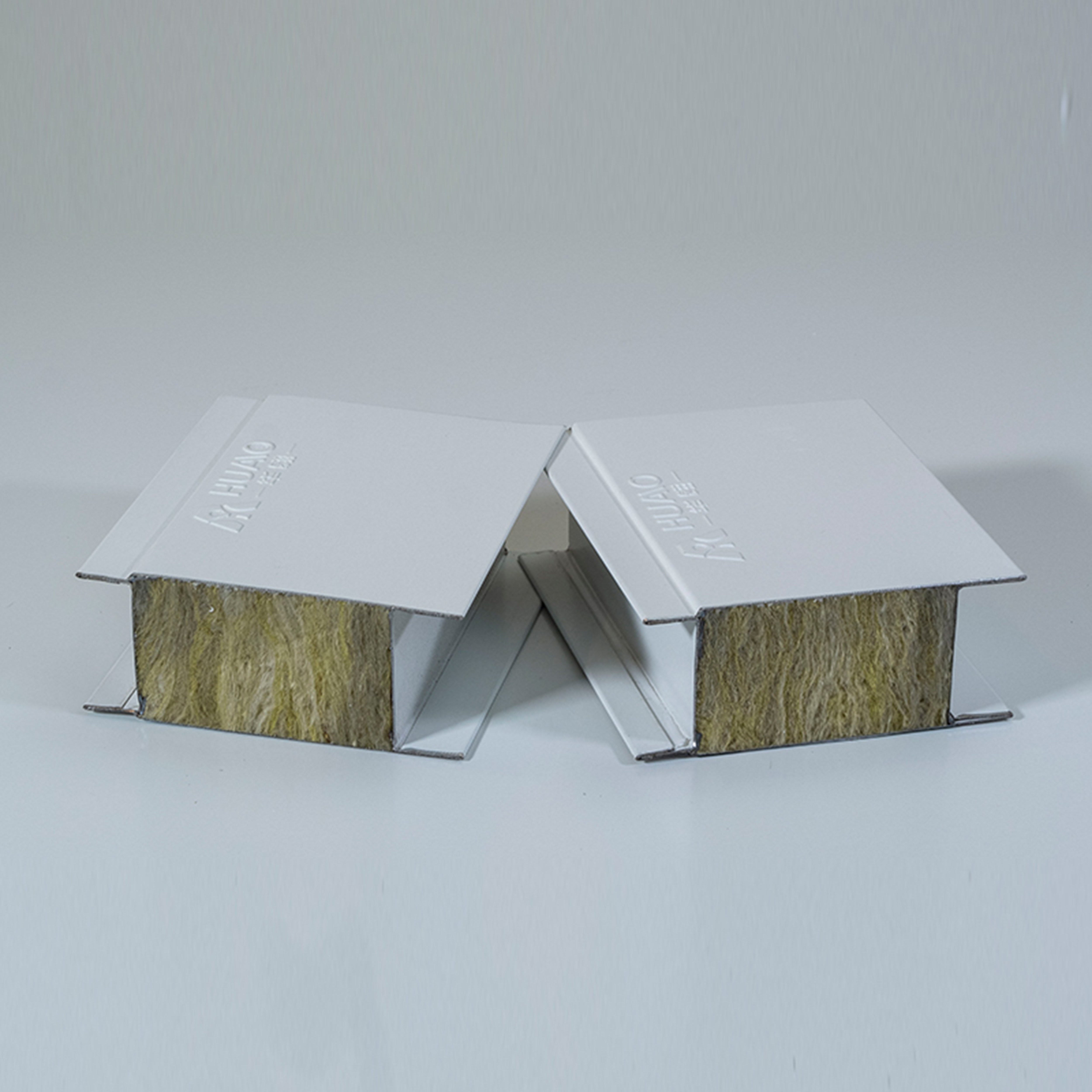
The term fire rating is commonly used in procurement documents, but it can refer to different technical characteristics.
Before comparing products, buyers should establish what the project specification requires.
Reaction to fire describes how a material or product behaves when exposed to fire under defined test conditions.
Depending on the standard, testing may examine ignition, flame spread, heat release, smoke production or other characteristics.
Under the European classification system, EN 13501-1 provides a framework for reaction-to-fire classifications.
The main classes include A1, A2, B, C, D, E and F.
Some classifications also include supplementary indicators relating to smoke production and flaming droplets.
These classifications should be interpreted according to the complete designation and applicable test conditions.
Fire resistance addresses a different question.
How long can a tested building element maintain specified performance when exposed to a standard fire test?
For wall assemblies, relevant criteria may include integrity and insulation.
The results are generally expressed as a time-based classification.
However, the classification applies to the tested assembly and its permitted field of application.
It should not be interpreted as a universal property of the panel core.
Consider a cleanroom wall constructed from steel-faced sandwich panels.
The core material may have a particular reaction-to-fire classification.
The complete wall also includes joints, supports, fixings and perimeter connections.
These components can influence the performance of the assembly.
Consequently, a material classification alone cannot establish the fire-resistance duration of the installed wall.
This distinction is fundamental when reviewing cleanroom panel fire ratings.
A fire test report should provide enough information to identify what was tested and under which conditions.
The report title alone is not sufficient.
The first check is the applicable standard and its edition.
A report referencing ASTM E84 addresses a different property from one referencing ASTM E119.
Similarly, an EN 13501-1 classification should not be treated as equivalent to a fire-resistance classification under EN 13501-2.
The buyer should confirm that the test method corresponds to the project requirement.
The report should describe the tested specimen.
For sandwich panels, relevant information may include:
A report for one panel configuration should not automatically be used to qualify another.
For example, changing the core material or panel thickness may require additional evidence.
The procurement team should verify the report number, issuing laboratory, date and product identification.
It is also important to distinguish between a test report and a classification report.
A classification report may interpret test evidence according to a classification standard.
The project should identify which documents are required.
A test result may have limitations concerning dimensions, installation methods or other construction details.
These limitations are especially important for modular cleanroom systems.
A panel installed differently from the tested configuration may not have the same documented performance.
The project engineer or relevant authority should determine whether the evidence is acceptable for the intended jurisdiction.
A report issued under one testing system is not automatically interchangeable with another country's approval requirements.
This is particularly relevant for international projects involving imported construction materials.
Core material is an important part of sandwich-panel selection.
However, it is not the only factor affecting fire performance.
Rock wool is widely used as a core material in building and cleanroom panel systems.
Its characteristics depend on the specific product and construction.
For procurement purposes, the buyer should request the complete panel specification rather than relying on the generic term rock wool.
Core density, facing construction, adhesive system and panel joints may all be relevant to the approved configuration.
Magnesium oxysulfate and other magnesium-based panel constructions are also used in cleanroom applications.
These products should be assessed according to their documented composition and tested configuration.
The presence of a magnesium-based core does not, by itself, establish a particular Euroclass or fire-resistance period.
Different formulations and assembly details may produce different results.
Metal facings are common in cleanroom sandwich panels.
However, the performance of the complete product may also depend on coatings, bonding materials and internal construction.
A test report should therefore identify the relevant specimen details.
Substituting materials without evaluating the effect on the tested construction can create compliance uncertainty.
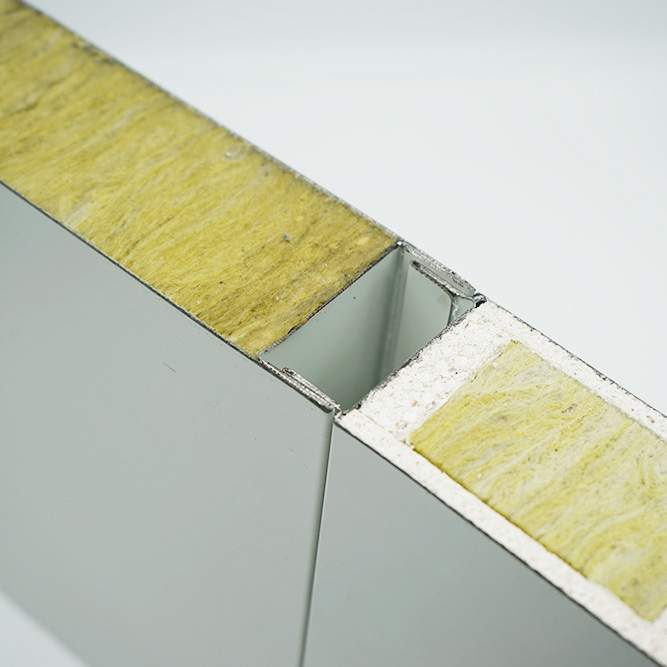
Joints are particularly important in modular wall systems.
A wall contains more than individual panels.
Connections between panels, perimeter interfaces and supporting members form part of the installed construction.
Where a fire-resistance classification is required, these details should be coordinated with the tested assembly.
Cleanroom walls frequently accommodate doors, observation windows, electrical services and other penetrations.
These elements may require separate fire-performance evidence or approved protection details.
A fire-resistance classification for an uninterrupted wall does not automatically cover every opening.
For this reason, the construction drawings should be reviewed alongside the panel test documentation.
International cleanroom projects may reference European, American or other national standards.
The correct standard depends on the location and specification of the project.
EN 13501-1 concerns reaction-to-fire classification.
EN 1364-1 provides a method for testing the fire resistance of non-loadbearing walls.
The latter is relevant when the project requires evidence for a complete non-loadbearing wall assembly.
The test method and classification process should be considered together. NEN
ASTM E84 evaluates surface-burning characteristics under specified test conditions.
It provides comparative measurements associated with flame spread and smoke development.
ASTM E119 addresses the fire-test response of building construction and assemblies.
These standards answer different questions.
A product's ASTM E84 result should not be presented as proof of a one-hour wall fire-resistance rating. ASTM Store
ISO 13784-1 addresses reaction-to-fire behaviour in a sandwich-panel building system under a specified small-room test arrangement.
The method considers the behaviour of the system rather than only an isolated core sample.
However, it is not intended to determine fire resistance.
Buyers should therefore avoid substituting this result for a required wall fire-resistance test. ISO
| Standard | Main purpose | What buyers should verify |
|---|---|---|
| EN 13501-1 | Reaction-to-fire classification | Product and classification scope |
| EN 1364-1 | Fire resistance of non-loadbearing walls | Tested wall construction |
| ASTM E84 | Surface-burning characteristics | Tested surface and reported indices |
| ASTM E119 | Fire response of building assemblies | Assembly construction and test duration |
| ISO 13784-1 | Reaction to fire of sandwich-panel systems | Tested system configuration |
These standards should not be treated as interchangeable.
The project specification must identify the required performance and accepted evidence.
A quotation request should make the technical requirements clear before suppliers prepare their offers.
The term fireproof sandwich panel is too broad for a reliable comparison.
The buyer should identify whether the panels will be used for cleanroom partitions, ceilings or another construction element.
The required performance may differ according to the location.
A non-loadbearing internal partition and a ceiling assembly should not automatically be assessed using the same evidence.
The RFQ should state whether the project requires reaction-to-fire performance, fire resistance or both.
Where a classification is specified, the applicable standard should also be identified.
Avoid descriptions such as high fire resistance without measurable acceptance criteria.
The RFQ should include the required panel type, nominal thickness, facing material and relevant installation details.
If the specification permits alternative core materials, the acceptable alternatives should be defined.
The supplier should identify the exact construction being quoted.
The procurement team should request the relevant test or classification reports.
The supplier should also provide technical drawings that allow the project engineer to compare the proposed construction with the tested specimen.
Where the project requires a particular approval or certification, that requirement should be stated separately.
The specification should address joints, supports, openings and connections to adjacent construction.
This is particularly important where a fire-resistance classification depends on the complete assembly.
Responsibility for fire-stopping around penetrations should be clearly assigned.
Before purchase approval, the contractor should compare the submitted product with the approved specification.
Any deviations should be documented.
The project engineer or responsible authority should determine whether additional testing, assessment or alternative documentation is required.
A lower price does not compensate for missing compliance evidence.
Incomplete documentation does not always mean that a product is unsuitable.
However, it means that the required performance has not yet been adequately demonstrated.
A missing report is not the same as a failed fire test.
The correct response is to identify the evidence gap.
The supplier may need to provide an existing report, clarify the product configuration or arrange an appropriate assessment.
The buyer should avoid making unsupported assumptions in either direction.
Suppose a manufacturer offers two sandwich panels with different core materials.
Only one has a relevant fire test report.
The result should not automatically be applied to the other product.
The same caution applies when thickness, facing construction or joint details differ.
International suppliers sometimes describe products using multiple classification systems.
For example, a quotation may mention a European reaction-to-fire class alongside an American surface-burning classification.
These statements should be supported independently.
A direct equivalence should not be assumed without an accepted technical basis.
For larger projects, a simple compliance register can prevent confusion.
The register should identify the specified requirement, proposed product, supporting document and review status.
It should also record unresolved questions.
This allows the procurement team to distinguish approved products from those still awaiting clarification.
Understanding cleanroom panel fire ratings requires more than comparing the words fireproof and fire-resistant.
The buyer must distinguish reaction-to-fire behaviour from fire resistance, identify the tested construction and verify that the submitted documents apply to the proposed product.
For international cleanroom projects, the most reliable starting point is a clear specification supported by traceable test evidence.
Not necessarily. An A1 reaction-to-fire classification and a 60-minute fire-resistance classification describe different properties. Fire resistance requires evidence applicable to the tested building assembly.
No, not when the specification requires evidence of wall fire resistance. ASTM E84 evaluates surface-burning characteristics. A suitable assembly test or other accepted evidence may also be required.
Not automatically. The report must apply to the proposed product or fall within an accepted field of application. Different constructions may require separate evidence.
Contractors should request the relevant test or classification reports, product identification, technical drawings and evidence showing that the proposed assembly is covered by the reported results.
No. Fire performance depends on the relevant building elements and approved construction details, including joints, openings and penetrations.
 EN
 AR
 NL
 FI
 FR
 DE
 EL
 HI
 IT
 JA
 KO
 PT
 ES
 RU
 TL
 ID
 UK
 VI
 TH
 HU
 TR
 MS
 LA
 BN
 MN
 MY
 UZ
 KK

