 EN
EN
 AR
AR
 NL
NL
 FI
FI
 FR
FR
 DE
DE
 EL
EL
 HI
HI
 IT
IT
 JA
JA
 KO
KO
 PT
PT
 ES
ES
 RU
RU
 TL
TL
 ID
ID
 UK
UK
 VI
VI
 TH
TH
 HU
HU
 TR
TR
 MS
MS
 LA
LA
 BN
BN
 MN
MN
 MY
MY
 UZ
UZ
 KK
KK


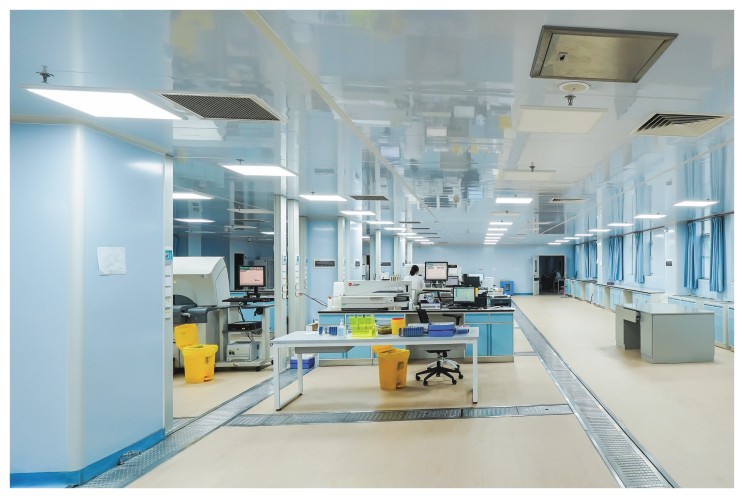
The material which a cleanroom door is constructed of will affect contamination control, strength, and fan filter unit system compatibilities. Cleanroom doors need to be able to withstand chemical disinfectants, shed no particles, operate frequently over a number of years, and remain airtight. The use of the incorrect material will result in warping, degradation of the surface and leakage that will cause FFU systems to overcompensate with increased fan speed. By understanding what materials are most commonly found in cleanroom doors, facility managers can make the best choices in meeting the cleanliness needs.
Core Material Requirements for FFU Environments
Cleanroom doors designed for FFU environments must meet several basic requirements. The surface should be non porous, smooth, in order to not adhere the particles and to facilitate easy cleaning. The material should be resistant to disinfectants(e.g. quaternary ammonium, hydrogen peroxide, chlorine compounds). Dimensional stability is also critical to ensure uniform gasket compression and prevent air leakage. Last but not the least, the material should not release volatile organic compounds that could contaminate sensitive processes or affect indoor air quality.
Constant pressure differentials affect doors in FFU cleanrooms. The material should not be flexible and bend easily under weight. Thin or poorly reinforced doors tend to move when pressure is applied, resulting in gaps around the edge of the door. This deflection is prevented by using thicker construction, or when more stiffeners are added inside. The material also affects the weight of the door, which will affect the performance of the hinge and the closing mechanism.
Medical Grade PVC Faced Panels
One of the most popular types of cleanroom doors for pharmaceutical and hospital use is PVC-faced panels. The surface is a hard coating of polyvinyl chloride (PVC) and can be attached to a core material, such as honeycomb or solid plastic. The PVC face is entirely non porous and will not degrade from a large variety of chemicals such as alcohols, phenols and peroxides. Smoothness makes wiping easy and prevents particles from becoming trapped in microscopic valleys.
Overall performance is based on the core material. Honeycomb cores are light and have good rigidity per unit mass and can be used in high traffic areas where operator fatigue is a concern. Solid plastic cores make them more impact resistant and offer superior sound insulation but are also very heavy. The PVC's water resistance and resistance to moisture and humidity changes are both important properties, and they are both useful to keep a sheet flat over time. The main drawback is susceptibility to scratching, but scratches do not affect cleanability and can be polished out with special compounds.
Powder Coated Steel Doors
Steel doors are very strong and impact proof in high-stress industrial cleanrooms. It is constructed from cold rolled steel with pan construction and reinforcement on the inside. The surface is coated with the powder that is baked on to give a hard and smooth surface. Powder coated steel is not going to dent or deform from repeated impact of carts or equipment.
Coating chemistry is essential to a cleanroom application. Conventional architectural powder coatings may contain fillers that create a microscopically rough surface. The powder coatings used in cleanroom applications are designed to be finer and have greater flow rates to produce a smoother surface. Edge coverage is also crucial because if steel is left bare at the edges of the cuts, it will rust in the event of exposure to cleaning solutions. Quality steel doors are fully welded with corners and the entire surface covered with a coating. The disadvantages are weight, which necessitates use of heavy-duty hinges and the use of closer mechanisms.
Stainless Steel for Aggressive Environments
Stainless steel is used for cleanrooms if using halogenated disinfectants or wet process. Type 304 stainless steel best meets the corrosion resistance needs of most pharmaceutical and food applications. Type 316 with added molybdenum resists pitting under chlorides, and is recommended for service in conditions where saline solutions or some sanitizers may be present.
Surface finish is very important. A No. 4 brushed finish offers a balance of cleanability and scratch resistance. A No. 8 mirror finish is the easiest to clean but shows every fingerprint and scratch. No painting or coating is necessary with stainless steel doors, meaning there is no danger of failure of the coating or outgassing. It is also non-combustible as required by fire code for egress paths. The drawbacks are high cost and significant weight. Generally, stainless steel doors need special reinforcement in the frame and hinges.
Matching Material to Cleanliness Class and Usage
Choosing the appropriate material depends on the cleanliness class and intended use. The choice of door material is based on cleanliness class, chemical exposure profile, and traffic frequency. PVC faced panels are ideal for use in general manufacturing where ISO 7 and ISO 8 are required. Powder coated steel offers durability for ISO 6 and above when used with aggressive cleaning procedures. Stainless steel is the only material that will not corrode when treated with disinfectants or used in wet processing. Before ordering any door materials, assess the unique situation you are in and always ask for surface finish samples for particle testing prior to the installation of any doors.
