 EN
EN
 AR
AR
 NL
NL
 FI
FI
 FR
FR
 DE
DE
 EL
EL
 HI
HI
 IT
IT
 JA
JA
 KO
KO
 PT
PT
 ES
ES
 RU
RU
 TL
TL
 ID
ID
 UK
UK
 VI
VI
 TH
TH
 HU
HU
 TR
TR
 MS
MS
 LA
LA
 BN
BN
 MN
MN
 MY
MY
 UZ
UZ
 KK
KK


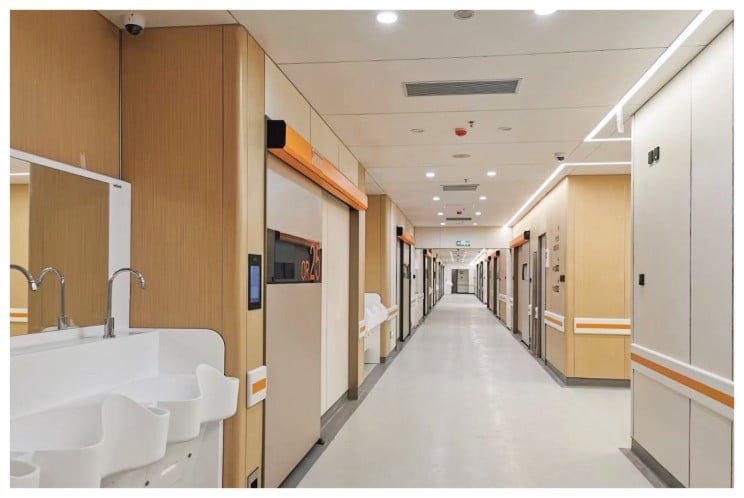
When contamination control is paramount in an FFU environment, the performance of each component must be flawless. Doors are one of the most-used surfaces in any cleanroom and also one of the biggest potential sources of particle generation and air leakage. Doors can interfere with one-way air movement, allow items and people in or out that can spoil the cleanliness, and cause pressure changes that make the FFU systems do more work. By following the best practices for cleanroom doors you can be sure that the FFU investment you make will provide the desired levels of cleanliness.
Understanding How Doors Become Contamination Sources
There are three main ways doors can be a source of contamination. Air leakage around the edge of doors permits unfiltered air from a lower grade corridor or adjacent room to enter the clean zone. This will result in fine particles bypassing the HEPA filters on your FFU array and going straight into the environment. Second, friction particles are generated by the mechanical opening and closing of the door from hinges, sliding tracks, gaskets etc. Third, microorganisms can grow in cracks or on porous surfaces, and when the door is moved, they become aerosolized.
The fan filter units installed in FFU cleanrooms create positive pressure relative to the surrounding areas. Air is pushed out through any opening due to this pressure differential. Too high a positive pressure means that the FFU system will have to draw makeup air from outside the cleanroom, increasing the amount of air that leaks into the space. This makeup air needs to be further filtered and conditioned, which raises the energy cost and loading of filters. The measurement of door leakage is therefore an important part of the contamination control planning.
Sealing Strategies for FFU Door Openings
The one most important contamination control measure is correct door sealing. A cleanroom door should have continuous gasket on the head and both jambs and a threshold seal or automatic drop seal at the bottom. The material of the gasket is crucial. Silicone rubber has superior compression set and can be repeatedly disinfected. EPDM is long lasting and inexpensive, but less effective with some chemical sterilant. Closed cell neoprene foam offers good closing force reduction and sealing.
The compression of gasket should be consistent all the way around the edge of the door. Pressure decay testing is necessary if there are any gaps that are uneven to detect localized leakage paths. Adjustable hinges provide exact alignment of the door leaf in the frame for consistent gasket contact. Double gasket systems with an air gap between the gaskets can be used for redundant sealing and inter gasket pressure can be monitored as a leak detection mechanism in high performance cleanrooms.
Sealing is more difficult, but not impossible, for the sliding doors. Positive closure can be achieved with magnetic gaskets, like the ones on refrigerator doors. The brushes on the front edge should be dense enough to prevent light from passing through when viewed from the clean side. The bottom track should have a recessed channel and a wiping seal that engages the bottom of the door in a continuous manner throughout the door's travel.
Minimizing Particle Generation from Door Operation
Particles are still produced even if the door is perfectly sealed when it is in motion. Hinged doors should be fitted with ball bearing hinges that are lubricated to minimize friction debris. Plated steel may strip away with time, but stainless steel hinges do not. The surface of doors should be smooth and non shedding. If the paint surface is cured hard and tested for the release of particles, painted surfaces are acceptable. PVC faced panels, high pressure laminate or powder coated aluminum are better materials.
Care must be taken in selecting door closers. Surface-mounted hydraulic closers tend to pick up dust and release oil mist over time. Overhead closers that are hidden are cleaner, but harder to maintain. Most FFU cleanrooms require varying levels of closing force something that is provided by a simple spring hinge, which is adjustable to provide the necessary closing power without the possibility of contamination from hydraulic mechanisms.
The frequency of operation is directly related to the particle generation. Install airlock or pass through where practical to minimize door cycles to critical area in high traffic cleanrooms. Doors to anterooms can be interlocked to ensure that both doors cannot open at the same time, maintaining the pressure differentials and reducing the entry of particles.
Cleaning Protocols and Maintenance Schedules
Regular cleanings of doors is necessary to prevent particle buildup and biofilm formation. Use validated disinfectants to wipe cleanroom doors every day. The wiping motion needs to be in one direction, top to bottom, and finish with the edge of the door and gasket. Gaskets are frequently overlooked, yet mold and bacteria can grow within their folds. Gasket integrity should be checked weekly and the cracked or permanently compressed sections should be replaced immediately.
Annual pressure decay testing quantifies door performance. If the door is no longer holding pressure, then check the gaskets and alignment. All hinges should be lubricated with cleanroom grade, non migrating grease and checked for wear. By following these best practices, the cleanroom doors work to complement your FFU system and do not work against it. Filters are not the only means of contamination control. All penetrations of the cleanroom air barrier, such as doors, should be designed, installed and maintained to the same level.
