 EN
EN
 AR
AR
 NL
NL
 FI
FI
 FR
FR
 DE
DE
 EL
EL
 HI
HI
 IT
IT
 JA
JA
 KO
KO
 PT
PT
 ES
ES
 RU
RU
 TL
TL
 ID
ID
 UK
UK
 VI
VI
 TH
TH
 HU
HU
 TR
TR
 MS
MS
 LA
LA
 BN
BN
 MN
MN
 MY
MY
 UZ
UZ
 KK
KK


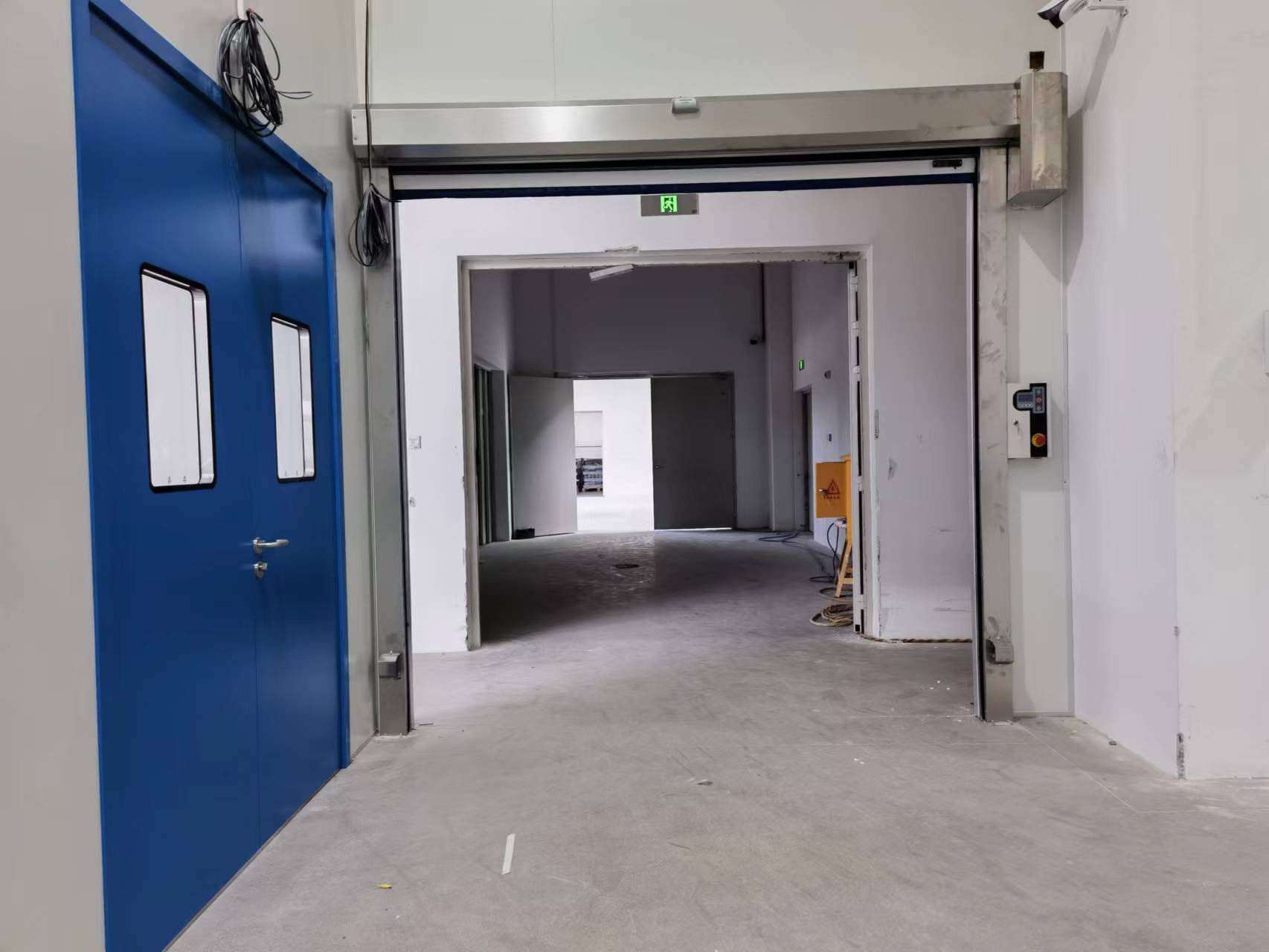
All components of the envelope should be able to maintain laminar airflow, pressures and contamination control during Fan Filter Unit (FFU) cleanrooms. Windows aren't an exception. There is a difference between flush mounted and framed clean room windows that can have a great effect on the performance of the FFU system. The standard choice has been framed windows, which have prominent and protruding edges, frames and sills. Advanced: Flush mounted windows is where the glass surface is level with the panel surface. Which of the following is a better choice for an FFU system? The four criteria below are analyzed comparatively.
1. Impact on Laminar Airflow Stability
Framed windows is an obstruent. The depth of the frame in the wall is typically 10-25mm. When the air speed supplied by FFU is downwards at 0.3 – 0.5 m/s, this protrusion causes separation of air. The wake is turbulent down stream and is 10 to 20 times the size of the obstacle. These turbulence areas within a room with several framed windows can span 30% or more of the wall area and therefore can pose conditions that can be detrimental to contaminant control.
This is not an issue for flush mounted windows. The cleanroom glass level is even with the surface of the panel. No ledges, no steps and no projecting frame. Air that passes through the window moves smoothly and continuously as if it were a solid barrier. The velocity change at the wall boundary measured by CFD for flush windows is less than 5%, as compared to the velocity change of 20-30% for the framed windows. With unidirectional (unid) laminar flow systems, flush windows are definitely better. Winner: Flush windows
2. Pressure Integrity and Seal Durability
The compression seal between the frame and panel and the compression seal between the frame and the glass are the crucial components of framed windows. They contain several interfaces which means that several potential leak paths exist. Over time the compression of the seal is released and the differential pressure cycles flex the frame, resulting in small gaps. Although FFUs leak 1-2 m3/h per window, they have to be operated at greater capacity and at higher speed which results in increased energy consumption.
The design is completely different, however, and the seal is used with flush windows. The glass is directly attached to a metal frame and sealed to the panel; or the window is part of a system that is continuous with flush profiles and gasketed around the edges. The flush design makes for a uniform and easy seal compression as it is one plane. Huaao's flush windows are tested for a lower air leakage compared to the conventional framed windows (1.5-3.0 m³/h at 50 Pa). In FFU systems in which the airspace pressure needs to be maintained 24/7, flush windows offer improved long-term integrity.
Winner: Flush windows
3. Cleanability and Particle Retention
Framed windows have crevices that are composed of the space between the window frame and the panel, the space between the window frame and window glass and the surface of the window frame. It can get dusty in these cracks and is difficult to clean. Corners collect alcohol wipes and disinfectants. Residue can build up with use and microbes can form in hidden spots.
There are no crevices in flush windows. The transition from panel to glass is a smooth flat surface. The flush windows of Huaao is made of powder-coated aluminum frame (RA < 0.8 μm), gap-less continuous silicone gasket. Cleaning personnel can clean all surface with one stroke. Open the windows in pharmaceutical cleanrooms or hospital operating rooms where bioburden control is crucial, to exclude contamination. Bioburden control is an important issue, in which case the windows open significantly reducing the risk of bioburden contamination in pharmaceutical clean rooms or hospital operating rooms.
Winner: Flush windows
4. Cost and Installation Flexibility
Generally, the cost of the framed windows is lower in comparison to other windows. Standard sizes such that they fit into a standard rough opening with simple fasteners. The installation tolerances are fairly large. Framed windows can be used in budget driven projects or a cleanroom of lower cleanliness (ISO Class 7/8). Precision manufacturing is needed for flush windows. Window should be cut to proper dimensions and the opening in the panel should be square. Care must be taken when installing to make it flush profile. Generally, the cost of these is 20-40 percent higher than framed options.
For FFU systems that need to meet ISO Class 5 or cleaner conditions, the cost of flush windows is paid back by the increased efficiency of the FFU system, the decreased use of energy and the reduction in contamination losses. When it comes to critical applications, the performance difference is worth the price. Losers: Cleanroom windows that are too expensive or inefficient for budget sensitive low class cleanrooms; Any window other than a flush window in high performance FFU cleanrooms
Summary
A flush window, in an ISO 5 and cleaner environment, can be more stable in a laminar flow than a conventional window, have a higher pressure integrity and be easier to clean. If lower class cleanroom is the only criteria, cost may be the determining factor, and framed windows may be considered. Huaao Clean Technology Group is a national high tech enterprise with six factories, a total production area of 250,000m2, 800 employees and an annual turnover of 1 billion RMB, and produces various styles of clean room windows, clean room doors, as well as all kinds of clean room one-stop systems. Meet with Huaao to figure out what window type will be perfect for your FFU project.
