 EN
EN
 AR
AR
 NL
NL
 FI
FI
 FR
FR
 DE
DE
 EL
EL
 HI
HI
 IT
IT
 JA
JA
 KO
KO
 PT
PT
 ES
ES
 RU
RU
 TL
TL
 ID
ID
 UK
UK
 VI
VI
 TH
TH
 HU
HU
 TR
TR
 MS
MS
 LA
LA
 BN
BN
 MN
MN
 MY
MY
 UZ
UZ
 KK
KK


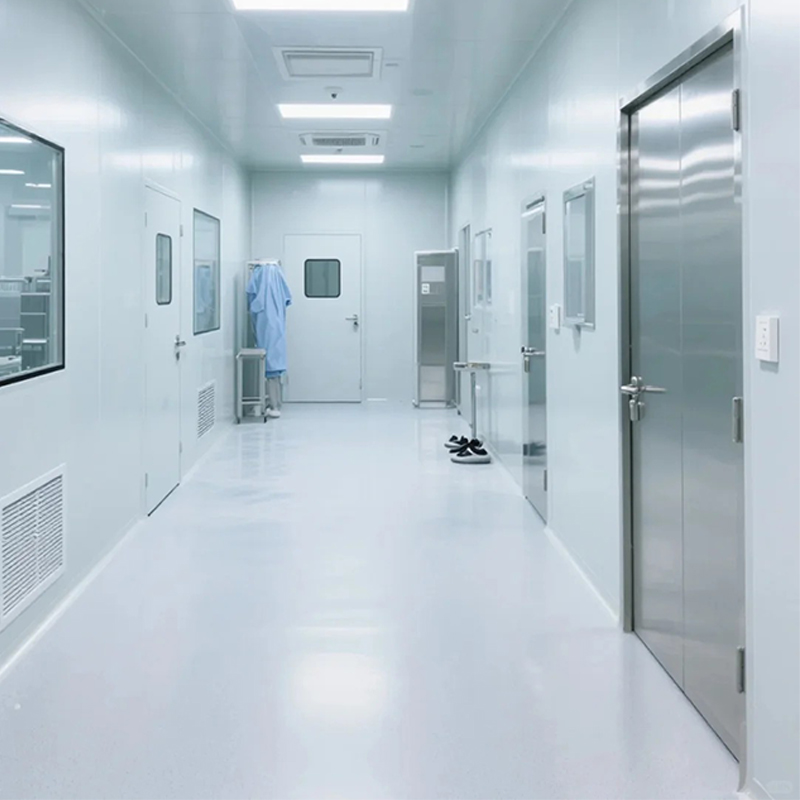
Areas with high airflow are areas in close proximity to the FFU, close to return air grilles or areas within supply plenums with high airflow rate in a FFU (Fan Filter Unit) cleanroom. A common problem that persists is condensation. Moisture will condense on the window surface when warm, moist air comes in contact with the cold surface of the window. Condensation is an annoyance in a normal building. It turns into a contamination event in a cleanroom. Drops collect particles, particles promote microbial growth, and important processes can be impacted by drops falling. This is especially a problem in high airflow FFU areas that is addressed by anti-condensation clean room windows. Below are four significant design attributes:
1. Double Glazing with Low-Emissivity Coatings
The driving force for condensation is primarily the temperature of the surface is below the dew point of room air. Single glazing is a very poor R-value. In high airflow areas, the forced convection from the FFU actually increases heat transfer, thus making single glazing even more likely to condense.
The first line of defense for double glazing is the low emissivity (low-E). This gap between two panes of glass filled with a gas (argon or krypton) offers thermal resistance. The low-E coating will reflect radiant heat back inside the room, keeping the inside glass surface warm. Anti-condensation glass for Huaao windows is 4-6 mm tempered glass on every pane, which has low-E coating on the inner surface of the outer pane (surface #3) and has argon fill. In a typical cleanroom environment (22°C; 50%RH; dew point 11°C), the inside glass is maintained at a minimum temperature of 18°C when the outside air temperature is as low as -10°C. This 7°C margin will guarantee that there will be no chance for condensation.
2. Thermal Break Frames to Eliminate Cold Bridging
Condensation is possible on the window frame if it transfers cold from the outside of the house when double glazed. Aluminum frames have high thermal conductivity. If no thermal break exists, it is quite possible for the temperature of the inner surface of the frame to be several degrees cooler than the glass surface and form a condensation ring around the rim of the window.
The aluminum frame extrusion of Huaao's anti-condensation windows contains a polyamide thermal break. Thermal break is a structural plastic strip to prevent heat flow from the exterior frame sections to interior frame sections. Thermal breaks are required for high airflow FFU zones where convective heat transfer is high. Condensation is prevented even at the most vulnerable areas of the frame (corners).
3. Heated Glass Options for Extreme Conditions
Some FFU cleanrooms require more stringent conditions. High humidity can be used in pharmaceutical cleanrooms and they are usually run at 18°C. Extreme winter temperatures can be experienced in hospital cleanrooms close to exterior walls. Double glazing and thermal breaks may not be adequate.
In such applications, Huaao provides heated glass cleanroom windows. The inner glass surface is coated with a transparent conductive layer that is electrically connected to an electrical power supply (24V or 48V DC). Under power, the coating produces a moderate heat of about 50 to 100 watts per square meter that increases the temperature of the glass surface by 5-10℃ over the ambient temperature. This active solution ensures condensation is prevented in all circumstances, whatever the exterior weather and whatever the flow rate of the FFUs is. Heated windows are especially useful in cleanrooms which have high air change rates (100+ ACH) where forced convection can contribute significantly to heat transfer from the window to the air.
4. Hermetic Seals to Prevent Moisture Ingress
Another possible way condensation can form is by allowing humid air to enter the gas gap between the glass panes in a double-glazed unit if the seal fails. This is due to a failure of the seal, and the condensation that forms between the panes will not be cleaned. Pressure changes can cause degradation of seals in high-flow regions of the FFU.
Hot-melt butyl primary seals and polysulfide or silicone secondary seals are used by Huaao to manufacture double-glazed units. The molecular sieve desiccant in the spacer bar absorbs any moisture left in the production process. All units are individually tested to ensure that there are no leaks before they are fitted into the window frame. We also provide dual-seal and triple-seal windows for cleanrooms, backed by extended warranties for 24/7 use in FFU applications. The thermal performance of double glazing will not change during the life of the cleanroom, due to hermetic seals.
Summary
Anti-condensation clean room windows for high airflow FFU Zones are based on four aspects: Double glazing with low emissivity layer to keep inner glass warm; Thermal break frames to prevent cold bridging; Heated glass for extreme temperature measurements; Hermetic sealing of the glass for long term thermal performance. These windows are produced in a full range of cleanroom one-stop system by Huaao Clean Technology Group, a national high-tech enterprise, with six factories with a total of 250,000 m² production area, 800 employees and 1 billion RMB annual turnover. For anti-condensation windows on your high-airflow FFU cleanroom project, contact Huaao today.
