 EN
EN
 AR
AR
 NL
NL
 FI
FI
 FR
FR
 DE
DE
 EL
EL
 HI
HI
 IT
IT
 JA
JA
 KO
KO
 PT
PT
 ES
ES
 RU
RU
 TL
TL
 ID
ID
 UK
UK
 VI
VI
 TH
TH
 HU
HU
 TR
TR
 MS
MS
 LA
LA
 BN
BN
 MN
MN
 MY
MY
 UZ
UZ
 KK
KK


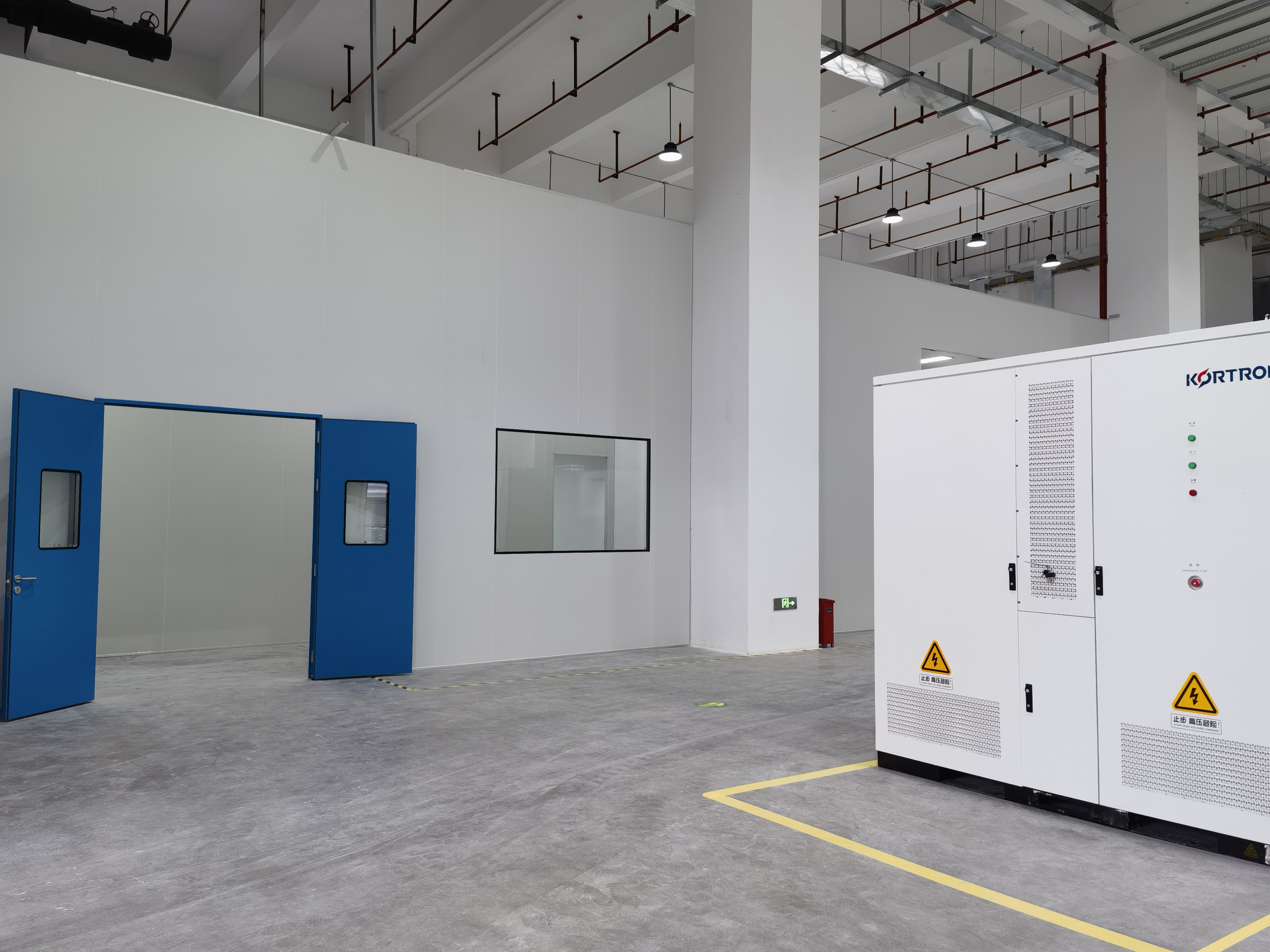
A hidden danger in critical environments such as operating rooms in hospitals, pharmaceutical factories, semiconductor cleanrooms, etc., is airflow turbulence. Particles are trapped in turbulent eddies, form stagnant areas and reduce Fan Filter Unit (FFU) efficiency. One of the most forgotten sources of turbulence is the clean room window and a lot of attention is given to the location of the FFU, the diffuser and return air grilles. Outward projections of window frames, or deep sills or irregular window surfaces do not provide a laminar flow. With a flush mounting clean room window, there are no disruptions.
1. Elimination of Protruding Frames and Ledges
The typical size of windows from the wall surface is 10–30 mm. Rejection is generated at the protrusion site and this leads to change in wall profile in this extension. With the high speed air moving down from the ceiling and hitting this barrier the air will recede from the wall surface creating a wake of eddies. These eddies can be up to 200-500mm downstream and can lead to an area of turbulence with particles not swept to the exhaust grills. To overcome this problem, the flush mounted windows will be aligned with the cleanroom surface of the panel. Due to the flush-mounting design, no ledge, step or recess is required for mounting the window frame with Huaao. Smooth transition between a panel and glass. The computational fluid dynamics (CFD) simulation of Huaao's flush mounted windows reveal that the velocity of the air at the window boundary to the wall is less than 5%, which is quite low compared with 20-30% for the traditional windows. Due to the low turbulence in ISO Class 5 cleanrooms (0.2-0.5 m/s unidirectional flow), the reduction in turbulence is directly proportional to the removal of the particles, and the contamination risk is reduced.
2. Smooth Glass-to-Frame Transition Without Crevices
Turbulence can also be caused by large projections. Micro-eddies are also created at the glass to frame interface by small gaps, crevices and bumpy surfaces. The micro eddies which occur particularly in the immediate vicinity of the wall surface, where particle deposition is most likely, are particularly problematic. As time goes by, particles settle in these crevices, and are no longer able to be cleaned, and can be a source of continuous contamination.
The windows of clean room from Huaao are installed flush with the wall panel, and have precision-extruded aluminum frames with a continuous silicone or EPDM gasket for a smooth flush surface between the window glass and frame. The gasket is compressed to make sure that it does not exceed a gap of 0.5mm. The edges of the glass are smooth and will not snag or become rough, and the glass is tempered or laminated. It is smooth which reduces residue and chemical pooling in pharmaceutical clean rooms, where hydrogen peroxide vapor or alcohol wipes are often used to sanitize, and provides laminar flow and cleanliness.
3. Consistent Wall Surface for Laminar Airflow Development
In laminar flow, the boundary layer should be uniformly developed over a whole wall surface. A new zone of transitional flow is created downstream whenever there is a interruption - such as a window or a door, a utility outlet, etc. Traditional windows can cause a number of boundary layer disturbances along the wall if there are several windows in the same room on one wall, then a fully developed laminar flow may not be achieved before air reaches the return grilles.
Flush mounted windows have a continuous wall surface between them. The windows featured on Huaao's cleanroom are the same surface finish as that of the other cleanroom panels (powder coated aluminum frames and smooth glass). The coefficient of friction and surface roughness is matched to minimize flow disturbances. Finally, if the cleanroom is very long and narrow and the FFUs are mounted on the entire ceiling, particle removal efficiency is maximized when the use of flush mounted windows takes advantage of the laminar flow effect which can be developed throughout the cleanroom and kept up both across the supply and return side of the FFU.
4. Compatibility with High Air Change Rates
The typical air change rate for a cleanroom in a hospital would be 20 to 300 air changes per hour (ACH). Typically an operating room is set to 20-25 ACH and a typical pharmaceutical clean room is set to be 50-150 ACH. At high air velocities, if there are small irregularities on the surface, a turbulent effect is created. Major eddies can develop at 100 ACH when there is a small protrusion (5 mm protruding window frame). Windows used for the test by Huaao are flush mounted, and tested at air velocity up to 1.0 m/s (which corresponds to about 200 ACH in room with 3-meters high ceiling).
The hot-wire anemometers are used to show that there is no turbulence intensity increase in the flush profile when compared with that on solid wall surface. The flush profile has been confirmed by velocity mapping using hot-wire anemometers and has been shown to produce no measurable increase in turbulence intensity as compared to solid wall surface. If the existing window openings need to be reused for a renovation, Huaao window assemblies can be used to install a window that has a 100% smooth interior of the rough opening.
Summary
The 4 methods by which the flush mounted clean room windows remove turbulence are: the removal of protruding frames, providing seamless transition between glass and frame, uniform wall surface for laminar flow and compatibility with high air change rates. The flush windows are manufactured by the national high tech enterprise, Huaao Clean Technology Group, with its six factories with a total floor area of 250,000m², 800 skilled technicians and annual business volume of 1 billion RMB. We are a supplier of clean room sandwich panels, doors and windows, aluminum profiles, PVC floor, purification equipment, shadowless lamps and ventilation valves. Contact Huaao today to learn how to enhance turbulence control with windows in your clean room renovation project.
