 EN
EN
 AR
AR
 NL
NL
 FI
FI
 FR
FR
 DE
DE
 EL
EL
 HI
HI
 IT
IT
 JA
JA
 KO
KO
 PT
PT
 ES
ES
 RU
RU
 TL
TL
 ID
ID
 UK
UK
 VI
VI
 TH
TH
 HU
HU
 TR
TR
 MS
MS
 LA
LA
 BN
BN
 MN
MN
 MY
MY
 UZ
UZ
 KK
KK


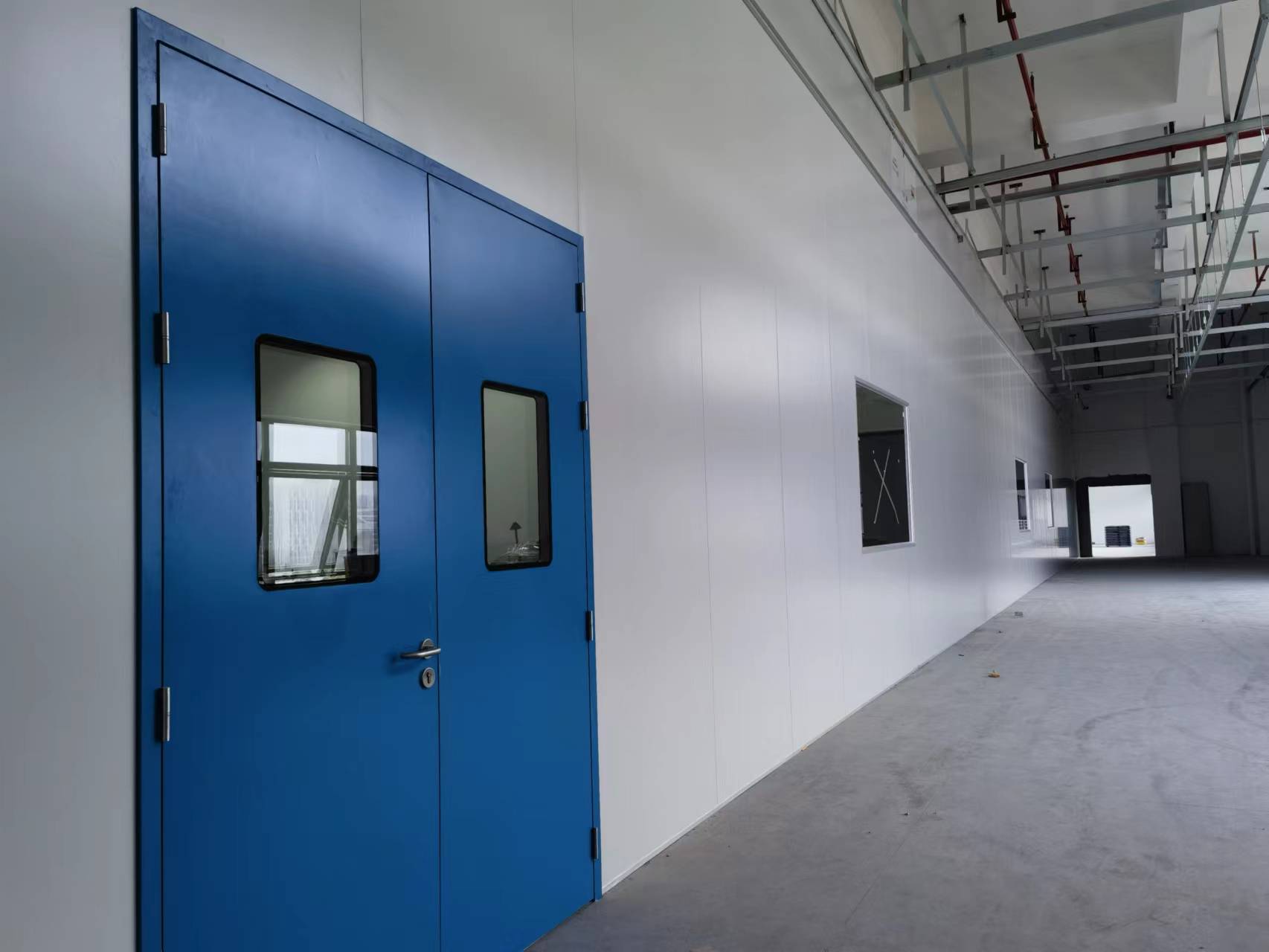
Today it is not about controlling one aspect of a cleanroom, it's about controlling the flow of air. It is a technology integration of Fan Filter Units (FFUs), wall panels, ceiling systems and most importantly clean room windows. Windows are not merely a hole, they impact air flow, pressure distribution and the direction of lines of contamination. Cleanroom windows is one of the components of the FFU system, which is designed to offer a higher amount of laminar flow stability, energy conservation and regulatory compliance. This integration enhances control of the flow of air in the following ways:
Window Placement Optimizes Return Air Pathways
A typical answer to the return air issue in a typical FFU based cleanroom is to use raised floor plenums and low wall grills. The direction and type of window will be important on determining where the air movement will occur from supply to return. The case where the overhang or deep sill is facing inwards to the room will create stagnant air zones where particles can come to rest.
The clean room window design of Huaao is to make the window surface flat with the clean room panel surface, no recess and ledge. This permits the air to flow in a laminar flow back through the wall. If the FFU units are in place and the window size and location will not be altered, the window can be designed to the specific size and location to not disrupt the window air flow pattern. The computer simulation, known as computational fluid dynamics (CFD), verifies a uniform air velocity profile found with flush mounted windows and a uniform cubic metres of cleanroom volume is supplied with the air changes per hour (ACH).
Pressure-Tested Seals Prevent Cross-Contamination
A negative or positive pressure is created between the cleanroom and other rooms by using an FFU. This differential will be impacted by any little leakage around a window. For instance, 0.5 – 1.0 m³ of unfiltered air can leak per hour through a 1 cm² gap between the FFU at a pressure differential of 50 Pa. Huaao clean room windows are air tight tested to meet the air test standard of GB/T 7106, ISO 13830 or other equivalent standards. This is a closed cell EPDM or silicone gasket sealing system even squeezing on the window frame when assembly to the panel structure. Double seal systems with a cavity that can be tested are also available for installations that require the highest integrity, such as an ISO 5 fill room in a pharmaceutical manufacturing plant, or a BSL-2 lab. They can work with FFU systems to ensure this pressure cascade made by the HVAC engineer is maintained 24/7.
Surface Finish Compatibility with Laminar Flow
Laminar flow is a foe of turbulence. The smoothness of the surface is crucial; any irregularities in the surface, such as a rough window frame, protruding handles or uneven coatings on the glass surface would cause eddies which would lead to particles being unevenly dispersed on the floor. This will have a negative impact on the ability of the FFUs to be effective, as areas that are not getting clean air will not and areas that get too much velocity will.
The Huaao powder coated aluminum frame windows have smooth surface finish (RA < 0.8 μm), and have no pores. Glass may be tempered or laminated and/or anti-static, and may have an optically flat surface. The frames are hidden and have flush handles which do not stick out from the glass plane. Surface compatibility guarantees that the air that this FFU supplies circulates uniformly thereby achieving the highest particle sweep efficiency.
Real-Time Monitoring Integration for Adaptive Control
Pressure, temperature and humidity sensors and particle count sensors are slowly becoming part of more modern FFU designs. These sensors can also be used to aid in maintaining setpoints and to enable adaptive airflow control by controlling the fan speed in real-time according to the filter loading condition or the activity in the room. One point to be noted, however, is that, over time, leaky and worn windows add more parameters to the adaptive systems to work with, and therefore consume energy.
Huaao's cleanroom windows can be integrated with the building management systems (BMS) with optional pressure port or contact sensor. A pressure port may provide direct pressure between the window, and will warn a facility manager of the loss of integrity. A contact sensor detects the position of windows. If open windows are allowed, for any reason, then FFU interlocks will not allow an open window.
Summary
With optimized window positioning, the return air paths are not obstructed, pressure-tested seals prevent cross-contamination, surface finish compatibility ensures laminar airflow and optional sensor integration enables the system to adaptively regulate airflow. The total area of its six factories is of 250,000 m², with 800 experienced employees, and annual revenue of 1 billion RMB, it can provide these high performance windows as a one-stop clean room modular system. Cleanroom panels, clean room doors and windows, Aluminum profile, PVC floor, Clean room purifiers and Clean room ventilation valves are being provided. Get a free quote for the windows in the clean room that can assist with airflow control in your project, with the aid of the FFU's today at Huaao.
