 EN
EN
 AR
AR
 NL
NL
 FI
FI
 FR
FR
 DE
DE
 EL
EL
 HI
HI
 IT
IT
 JA
JA
 KO
KO
 PT
PT
 ES
ES
 RU
RU
 TL
TL
 ID
ID
 UK
UK
 VI
VI
 TH
TH
 HU
HU
 TR
TR
 MS
MS
 LA
LA
 BN
BN
 MN
MN
 MY
MY
 UZ
UZ
 KK
KK


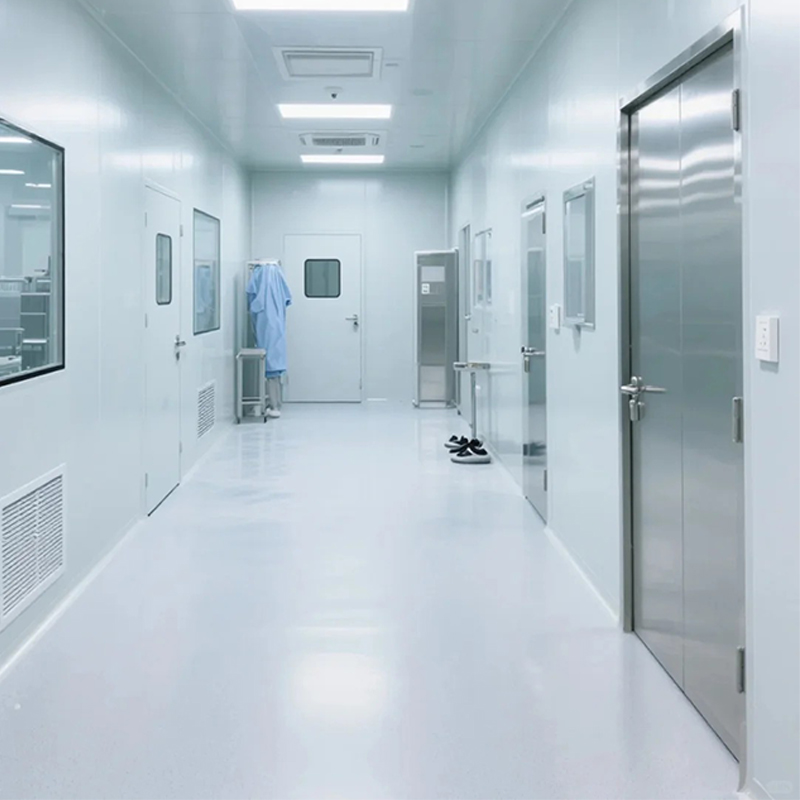
Caution should be used in designing a cleanroom to ensure that the correct type of door is used in each room. The type of door is a very important factor to consider when evaluating the airflow patterns, integrity of the pressure, particle generation and effectiveness of the entire FFU system. However, each has its own advantages and disadvantages in controlled environments, with sliding doors and hinged doors providing unique solutions. The engineer or facility manager can make decisions in the design of a new construction when he or she is aware of the conduct of each type of ceiling mounted FFU when used with the ceiling mounted FFU airflow.
How Door Operation Affects FFU Airflow Patterns
The uniform HEPA air filtered by the FFU is fed from the ceiling and results in a controlled sweep of the filtered clean air towards the floor level returns. Eddies can occur in any part of the pattern that causes particles to be suspended or deposited on critical surfaces. If a door is opened there will be some significant disruptions. The opening allows air to flow through for the most part because of the pressure differential, which pulls air and particles from other areas of low grade into the cleanroom.
The hinged door opens into room or to the corridor. When it enters the cleanroom it temporarily displaces a volume of clean air and forms a pressure wave. It swings outwards and needs vestibule or corridor space without impeding the airflow inside. However, this oscillating motion may lead to turbulence in the way of the swinging. A room with a horizontal track for a sliding door, which does not extend into the room. This diminishes the instant air displacement, but leaves other concerns, such as a cleanable track and sealing.
Hinged Doors Advantages and Limitations in FFU Cleanrooms
Hinged doors are the most common type of doors to be used in cleanrooms as they provide the best sealing and reliability. The leakage rate of a hinged door fitted with gaskets that continuously compress is typically less than 0.5 cubic feet per minute per square foot (cfm/ft²) for a differential of 75 pascals. This is an air tight performance, which will allow the FFU systems to achieve room pressure performance without putting excessive burden on the fan.
A hinged door's sealing mechanism is simple. Each side of the frame is shut to squeeze the gasket. A drop seal that is at the bottom extends automatically to the floor. It is a very straightforward mechanical operation, which can easily be inspected and maintained. In special areas of the hospital operating room and pharmaceutical filling room, hinged doors are typically employed when pressure control is required at all times.
One of the major drawbacks with hinged doors is space. There shall be clear floor space in front of the door swing radius. A hinged door can be a safety hazard or prevent equipment from being used in smaller cleanrooms. In addition, when the door is opened, a low-pressure area may be created which can be a source for the particles entering the breathing zone.
Sliding Doors Benefits and Challenges for FFU Systems
In small cleanrooms, narrow corridors or where a wall cannot be moved, sliding doors are desirable for their ability to save valuable floor space. The door panel slides along the panel to the wall without requiring to leave any gap between the panel and wall on either side of the door panel opening. This will enable maximising the usage of precious cleanroom square footage.
However, there are issues to overcome in an FFU environment. It is difficult to seal these openings at the floor and header. Seals often used are brush seals but brush seals can create particles as the door moves across them. With use, brushes become worn and can lose sealing ability. Another area where a door may leak is on the leading edge between the door and the area of the jamb which is more difficult to seal than a hinged door's compression seal.
The other is that the sliding mechanism can cause particles to be produced. Fine wear particles are created by wheels operating on tracks, particularly when operating on a regular basis. This particle load can be over the allowed count in high cleanliness classes (ISO 5 and ISO 6). This can be minimized but not eliminated by the use of stainless steel tracks and sealed bearings and non shedding wheel materials.
Making the Right Choice Based on Cleanliness Class and Usage Frequency
When it comes to choosing between sliding and hinged doors, there are three things to take into account. Cleanliness class is the most important. A door with a slide seal/brush seal and track in ISO 7 and ISO 8 cleanrooms may be acceptable. In ISO 5 and ISO 6 areas hinged doors with compression sealing are highly recommended.
There's also a factor of usage frequency. Particles can be a significant source from sliding doors in high traffic doors. Hinged doors are less complicated and offer less friction. The benefits of sliding doors are space saving on low traffic pass thru doors or emergency exits.
Finally, it could be a renovation requirement. Where there is no swing clearance, a hospital cleanroom retrofit can be achieved with a high quality sliding door with enhanced seals. Custom manufacturing can be employed to tighten tolerances and enhance material for sliding doors. Most FFU served cleanrooms will contain more particles and experience more pressure leakage without hinged doors. Sliding doors are used for specific niche applications where space is major concern. Consider your cleaning needs, flow of vehicles and physical limitations before deciding on the final product.
