 EN
EN
 AR
AR
 NL
NL
 FI
FI
 FR
FR
 DE
DE
 EL
EL
 HI
HI
 IT
IT
 JA
JA
 KO
KO
 PT
PT
 ES
ES
 RU
RU
 TL
TL
 ID
ID
 UK
UK
 VI
VI
 TH
TH
 HU
HU
 TR
TR
 MS
MS
 LA
LA
 BN
BN
 MN
MN
 MY
MY
 UZ
UZ
 KK
KK


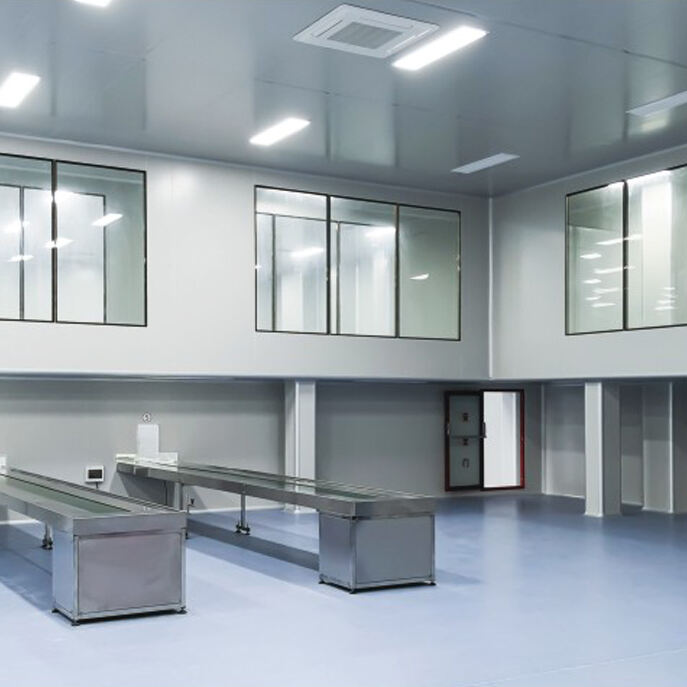
The combination of wall panels and Fan Filter Units (FFUs) is one of the key factors in the effectiveness of the controlled environment in cleanroom design. Wall panel designs in laminar flow cleanrooms requires a careful coordination with the FFU system, which must be designed to maintain ISO Class 5 or higher cleanliness levels, since the air flow must be unidirectional. As a national high-tech enterprise with comprehensive cleanroom solutions, Guangdong Huaao Clean Technology Group Co., Ltd. provides wall panel systems of cleanroom specifically designed for laminar flow applications.
Understanding Laminar Flow and FFU Requirements
Laminar flow cleanrooms have unidirectional airflow, meaning that the filtered air, which is provided by HEPA filters, is flowing parallel to the ceiling and the floor. This design provides for the rapid removal of particles generated in the workspace, thereby keeping particle levels extremely low for pharmaceutical manufacturing, semiconductors fabrication and healthcare applications.
Laminar flow cleanrooms will use an FFU as the main source of air supply. These units intake air from the ceiling plenum, pass through HEPA or ULPA filters and discharge the air downward at velocities of 0.45 to 0.50 meters per second. Several factors influence this uniformity of airflow, such as how the FFUs are installed, the ceiling design and the setup of wall panels.
Wall panels for laminar flow cleanrooms should help establish a uniform, stable airflow pattern. Air turbulence near walls is influenced by surface texture and mounting accuracy. Any surface irregularity, protrusion or gap can disrupt the laminar flow and cause eddies which will trap the particles. Research has shown that smooth, continuous surfaces are imperative to the performance of laminar flow systems when trying to maintain a consistent wall finish.
Panel Surface Finish and Airflow Optimization
The laminar flow performance is directly linked to the surface finish of wall panels. Rough surfaces, joints and protrusions can cause air currents to change near the wall, which may cause increased particle concentration in local areas and affect the effectiveness of the cleanroom.
A smooth and non-porous surface like PVDF-coated steel, stainless steel or aluminum reduces air turbulence and is recommended to be used in laminar clean rooms. Such surfaces also do not trap particles, and are easier to clean than textured materials. For critical applications, the surface roughness value (Ra) should be below 0.8 µm.
The no-ledges and no-crevices of flush mounted panel systems are desirable to prevent disturbance to the air flow and particles from ledges and crevices. Today's wall panels feature carefully designed edges, which fit tightly and precisely to meet flush at the joints, resulting in a seamless surface. It is important to be able to maintain the same air velocity and direction throughout the laminar flow zone.
High quality surface finishes and precision joining system are used on the wall panels of Huaao. These panels are offered in a variety of materials such as colour-coated steel, PVDF-coated steel, stainless steel and aluminium and are suitable for providing a smooth, uninterrupted surface to the cleanrooms that must be designed for laminar flow.
Sealing and Pressure Management
Laminar flow clean room is extremely important for air tight sealing. Relevant areas of non-uniform airflow can result from uncontrolled air leakage which may cause affected areas to become non-uniform and reduce the classification and performance of the cleanroom.
The joints of wall panels need to be engineered to provide a continuous seal against the pressure differentials encountered in a cleanroom. Ensuring that there is adequate sealing is crucial, whether it's pre-installed gaskets, silicone sealing or compression sealing. Wall panels in the cleanroom built and supplied by a company like FFU are required to allow the FFU to function properly and help to maintain the positive pressure inside the cleanroom.
Another part of the pressure management is to control the return air path. Many laminar flow designs will also include a return air riser or an integrated ductwork to optimize the flow of air around the panel without producing pressure imbalances. Appropriate design of the ceiling-to-wall interface is also critical as it is important to have air flow from the ceiling plenum directly through the FFUs and bypass the filtration system.
Huaao's panel systems have been engineered with full sealing solutions to ensure the pressure integrity of laminar flow cleanrooms, and stable operation of the FFU systems. Integration and Installation considerations
Integration and Installation Considerations
It is necessary to use ceiling grid co-ordination. Wall panels must join easily with the FFU ceiling panels and provide the adequate support and alignment of the filter modules. This will help the stream of air flow to pass smoothly and without gaps or misalignment that may cause turbulence.
Another factor to consider is penetration management. Electrical conduits, piping and monitoring equipment holes in the wall panels must be covered with compatible materials to ensure no leaks and air quality.
Long-term performance will depend on installation quality and accuracy. Panels need to be plumb, square and level ensuring uniform airflow. If installed incorrectly, gaps, misalignments and surface irregularities may arise that impact the cleanroom performance.
Huaao's modular panel systems are built to be easily installed without sacrificing the precision necessary for laminar flow applications.
Conclusion
The performance of laminar flow cleanrooms with FFU systems is very much dependent on wall panel design. Smooth surface finishes, airtightness and integrated design are critical in order to ensure the uniform unidirectional airflow which laminar flow cleanrooms require. At Guangdong Huaao Clean Technology Group Co.,Ltd, we provide full solutions for cleanroom wall panels to meet the needs of laminar flow applications. Contact us today and learn more about your laminar flow cleanroom needs and how our panel systems can improve your facility's performance.
