

A newly installed pass box may look ready for use. Both doors close, the stainless-steel surfaces appear clean, and the equipment fits neatly into the wall.
Yet none of these observations proves that the transfer sequence works as intended.
Cleanroom pass box commissioning should verify the installed equipment, not simply confirm that it was delivered.
The inspection needs to cover door interlocks, mounting interfaces, seals, controls, cleaning access and the actual movement of materials between rooms.
For pharmaceutical facilities, hospital laboratories and industrial cleanrooms, these checks help identify problems before the equipment becomes part of routine operations.
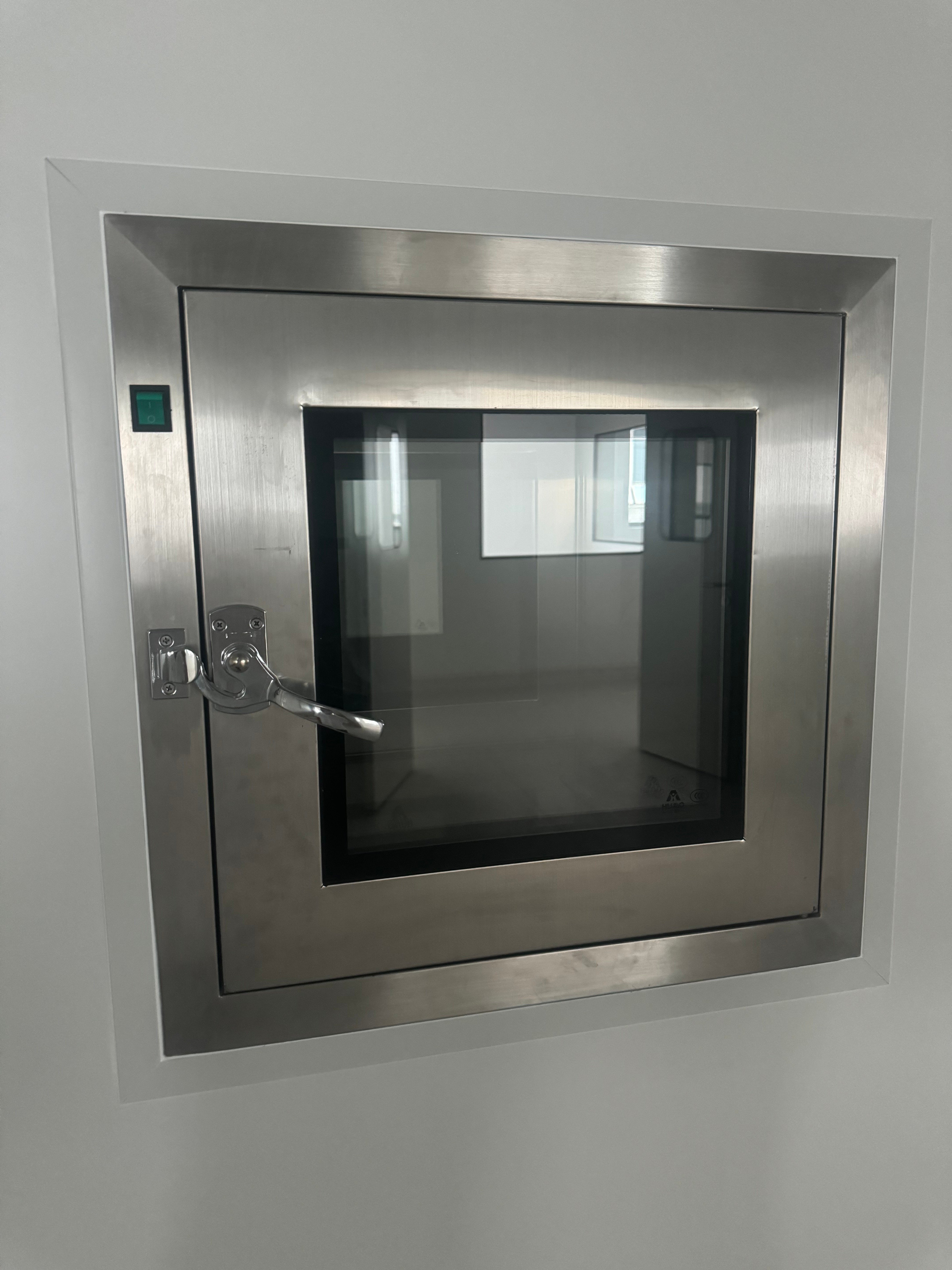
Commissioning begins with confirming that the installed equipment matches the approved project documentation.
A pass box can be mechanically functional but still be unsuitable for the intended transfer process.
The inspection record should identify the equipment location, reference number and approved configuration.
Where several pass boxes are installed, each unit should have a unique identification number.
For example:
PB-LAB-01
PB-LAB-02
PB-PHAR-01
The identification should correspond to the equipment schedule and installation drawings.
This helps maintenance personnel locate the correct unit when reporting a fault.
Check the equipment position relative to the surrounding wall.
The inspection should cover the mounting arrangement, visible perimeter joints and any specified sealing details.
A cleanroom wall may be made from modular sandwich panels, while the pass box has its own casing and frame.
The interface between these components requires a defined construction detail.
Do not assume that a properly manufactured pass box automatically provides an airtight wall connection.
Before testing, determine whether the installed unit uses mechanical or electronic interlocking.
Also identify any optional equipment.
This may include UV lamps, indicators, alarms or active air-handling components.
The commissioning procedure should match the actual supplied configuration.
A test checklist copied from another project may contain functions that the installed equipment does not have.
The interlock is a central part of the transfer sequence.
Its purpose is to control access between the two sides according to the approved operating logic.
The most important test is whether the doors behave correctly under normal and foreseeable operating conditions.
Begin with both doors closed.
Open Door A according to the manufacturer's instructions.
While Door A remains open, attempt to operate Door B using the normal operating method.
For a configuration designed to prevent simultaneous opening, Door B should remain secured.
Record the result.
The test should not involve excessive force or bypassing the locking mechanism.
Close Door A.
Open Door B and repeat the corresponding test.
This verifies that the interlock functions in both directions.
Testing only one side may leave an installation or control problem undetected.
Close both doors and confirm that the system returns to its intended ready condition.
Then perform a complete transfer cycle.
The operator should be able to place an item inside, close the first door and retrieve the item from the opposite side according to the approved procedure.
Observe whether the controls behave consistently.
Electronic and mechanical interlocks may respond differently to faults.
Where applicable, the commissioning plan should address:
The expected behavior must come from the approved product documentation.
There is no reason to assume that every pass box automatically releases both doors or locks both doors during power failure.
Door interlocking and sealing are separate functions.
An interlock can prevent simultaneous opening while the equipment still has poorly finished joints or damaged seals.
For this reason, the inspection should cover both.
Check the condition and positioning of the installed sealing components.
Look for visible damage, displacement, contamination or incomplete contact where the approved design requires contact.
The inspection method should follow the manufacturer's instructions.
A visual check is useful for identifying obvious defects.
However, it is not equivalent to a measured air-leakage test.
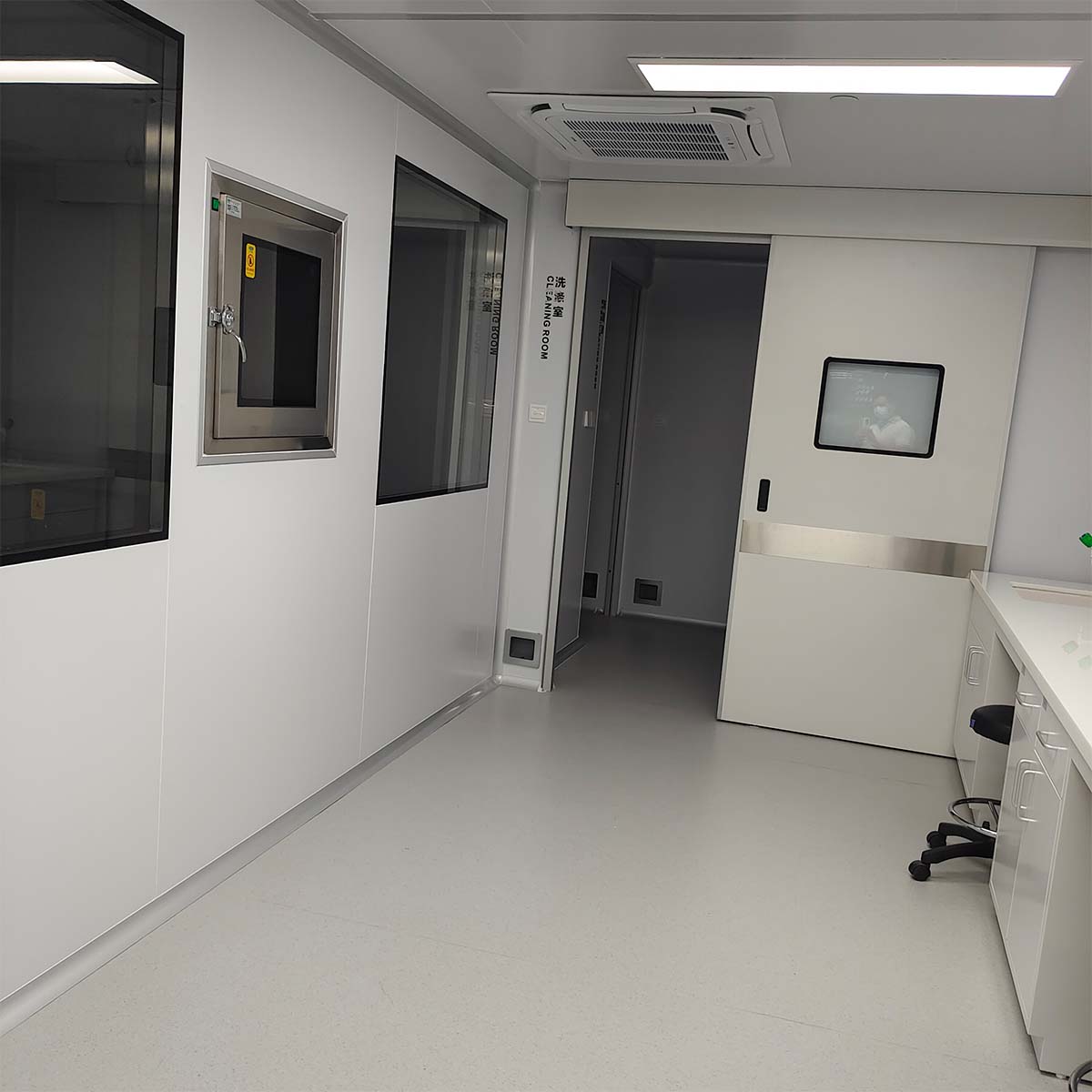
The equipment casing meets the surrounding cleanroom partition.
This connection may involve mounting frames, trim components and sealing materials.
The installation team should confirm that the completed detail corresponds to the approved drawing.
Pay attention to corners and transitions.
These locations can be difficult to inspect once surrounding finishes are complete.
If the project requires a quantified leakage performance, the acceptance procedure must identify an appropriate test method.
The test conditions and acceptance criteria should be agreed upon before commissioning.
A general statement such as “airtight pass box” is not enough to establish a particular leakage rate.
The same principle applies when the pass box is installed between rooms with different pressure relationships.
The ventilation engineer must evaluate the complete room arrangement.
Not every pass box has the same operating functions.
Some transfer arrangements rely mainly on controlled door access.
Other designs incorporate additional equipment.
Commissioning should distinguish between these configurations.
Where a UV lamp is included, check the approved operating sequence.
The inspection should identify how the lamp is activated, how its status is indicated and whether the door controls affect operation.
UV exposure can create safety concerns.
Therefore, any required protection against unintended exposure must be verified according to the approved equipment design.
A working UV lamp does not independently demonstrate sterilization.
Microbial reduction depends on exposure conditions, lamp characteristics, the transferred item and the validated process.
If the project requires a specific disinfection result, separate validation evidence is necessary.
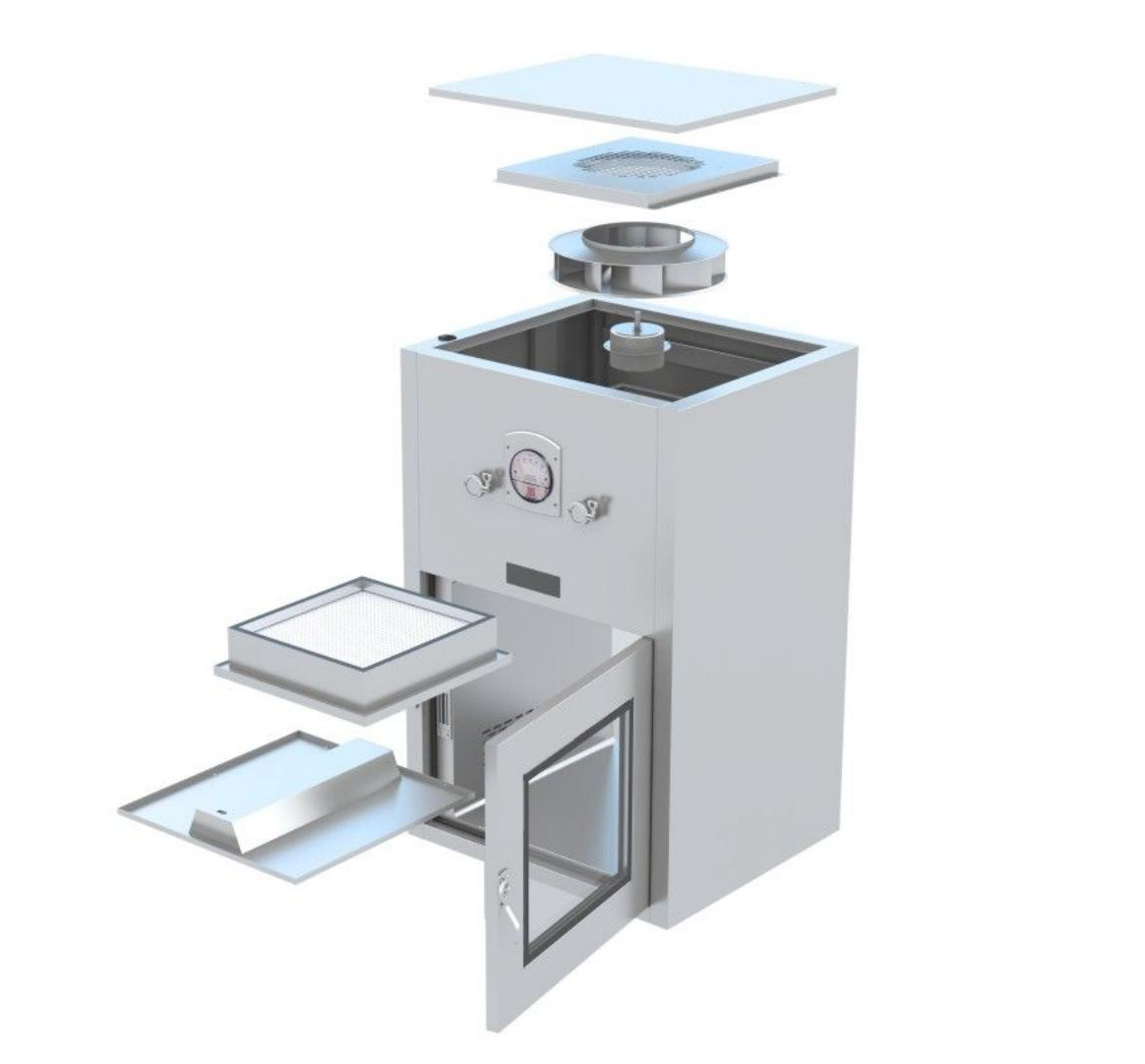
A self-cleaning or actively ventilated pass box may include fans and filtration components.
If these are part of the supplied model, the commissioning plan should address the relevant operating parameters.
Possible checks include fan operation, airflow direction, filter installation and control sequence.
The required measurements depend on the equipment design and project specification.
A static pass box should not be evaluated as though it were an active airflow device.
Where status lights or alarms are provided, confirm that they correspond to the intended operating conditions.
For example, a fault indicator should not be accepted merely because it illuminates.
The commissioning record should state which condition was simulated and what response was observed.
The pass box is not simply a piece of equipment.
It becomes part of the facility's material movement procedure.
The operating process must therefore be reviewed before handover.
ISO 14644-5:2025 addresses cleanroom operational controls, including material transfer, cleaning, maintenance and monitoring. The standard does not establish a universal cleaning procedure for every pass box model. ISO
Inspect whether operators can reach the chamber surfaces that require routine cleaning.
Consider corners, door edges, hinges and any installed shelves or trays.
A smooth surface may be easier to wipe, but cleaning effectiveness also depends on the approved method.
The facility should confirm which cleaning agents will be used.
Compatibility with the selected equipment materials and seals must be checked separately.
A practical commissioning test should include a representative transfer item.
The item should fit inside the chamber without interfering with door movement.
The operator should be able to load and retrieve it safely.
The test should also confirm that the transfer sequence is understandable to staff.
If the equipment is intended for frequent transfers, the project team may need to review whether the workflow creates unnecessary delays.
The handover documentation should identify who cleans the chamber and when.
The procedure should distinguish routine cleaning from maintenance work requiring equipment isolation.
Where the pass box is used in a regulated process, the operating procedure may require formal approval and training.
The equipment supplier's general cleaning instructions should not replace the facility's contamination-control procedures.
An acceptance checklist should make the commissioning results traceable.
A simple statement that the equipment was tested is not sufficient.
The record should identify what was checked, the applicable acceptance requirement and the result.
| Inspection Item | Required Evidence | Status |
| Equipment identification | Equipment schedule | Pass / TBC |
| Approved configuration | Datasheet and drawing | Pass / TBC |
| Installation position | Site inspection | Pass / TBC |
| Wall interface | Approved detail | Pass / TBC |
| Door A operation | Functional test | Pass / TBC |
| Door B operation | Functional test | Pass / TBC |
| Interlock sequence | Test record | Pass / TBC |
| Power-loss behavior | Approved procedure, if applicable | Pass / TBC |
| Door seals | Inspection record | Pass / TBC |
| UV function | Applicable test record | Pass / N/A |
| Active airflow | Applicable test record | Pass / N/A |
| Alarms and indicators | Functional test | Pass / N/A |
| Cleaning access | Inspection | Pass / TBC |
| Material transfer | Demonstration | Pass / TBC |
| Operating instructions | Handover document | Received / TBC |
| Outstanding defects | Defect register | Closed / Open |
The checklist must be adapted to the actual model.
A feature marked “not applicable” should not be treated as a failed test.
Likewise, a function that is contractually required should not be omitted because the installer considers it unnecessary.
For each functional test, record the date, equipment identification and responsible person.
Where a fault was simulated, describe the test condition.
If corrective work was required, document the action and repeat the relevant test.
This makes the handover record useful during later maintenance.
A pass box may pass its functional tests while the surrounding cleanroom still requires additional verification.
Room cleanliness, pressure relationships and other environmental parameters depend on the complete facility.
Equipment commissioning does not replace those system-level checks.
The owner should receive the approved operating instructions, relevant component information and maintenance procedures.
Where replacement seals, lamps or control components are required, the maintenance team needs the correct product references.
The project should also identify which maintenance activities require specialist support.
Cleanroom pass box commissioning is complete only when the installed equipment has been checked against its approved configuration and the facility understands how to operate it.
The most useful acceptance record connects functional tests, installation details, cleaning procedures and maintenance responsibilities.
Commissioning typically includes equipment identification, installation inspection, door operation, interlock testing, applicable control functions and handover documentation.
For a unit designed to prevent simultaneous opening, verify that opening one door prevents normal opening of the opposite door. Repeat the test in both directions and follow the approved operating procedure.
No. The required tests depend on the equipment configuration. A static pass box and an actively ventilated transfer chamber do not have identical commissioning requirements.
No. UV lamp operation alone does not establish a validated sterilization result. Any required microbial reduction must be supported by appropriate process evidence.
Typical documents include approved drawings, product information, operating instructions, relevant test records, maintenance guidance and defect closeout documentation.
 EN
 AR
 NL
 FI
 FR
 DE
 EL
 HI
 IT
 JA
 KO
 PT
 ES
 RU
 TL
 ID
 UK
 VI
 TH
 HU
 TR
 MS
 LA
 BN
 MN
 MY
 UZ
 KK

