

A pharmaceutical cleanroom passes its initial inspection. Several months later, maintenance staff notice moisture collecting around an observation window.
The glass is clear during the morning shift. By the afternoon, fogging appears near one corner. After cleaning, the moisture returns.
The first suggestion is to replace the window.
That may be premature.
Cleanroom window condensation can result from several different conditions: excessive moisture in the surrounding air, a cold glass surface, an unsuitable glazing arrangement or a problem at the window-to-wall interface.
These causes require different corrective actions.
Replacing the glass will not necessarily solve a humidity-control problem. Applying additional sealant will not repair a failed sealed glazing unit.
For cleanroom contractors and facility managers, the useful starting point is to identify where moisture appears, when it occurs and which environmental conditions accompany it.
Condensation develops when moist air contacts a surface cold enough for water vapor to change into liquid water.
The relevant condition is the relationship between the air's dew-point temperature and the temperature of the glass or frame.
If the surface temperature falls below the dew point of the adjacent air, condensation can occur.
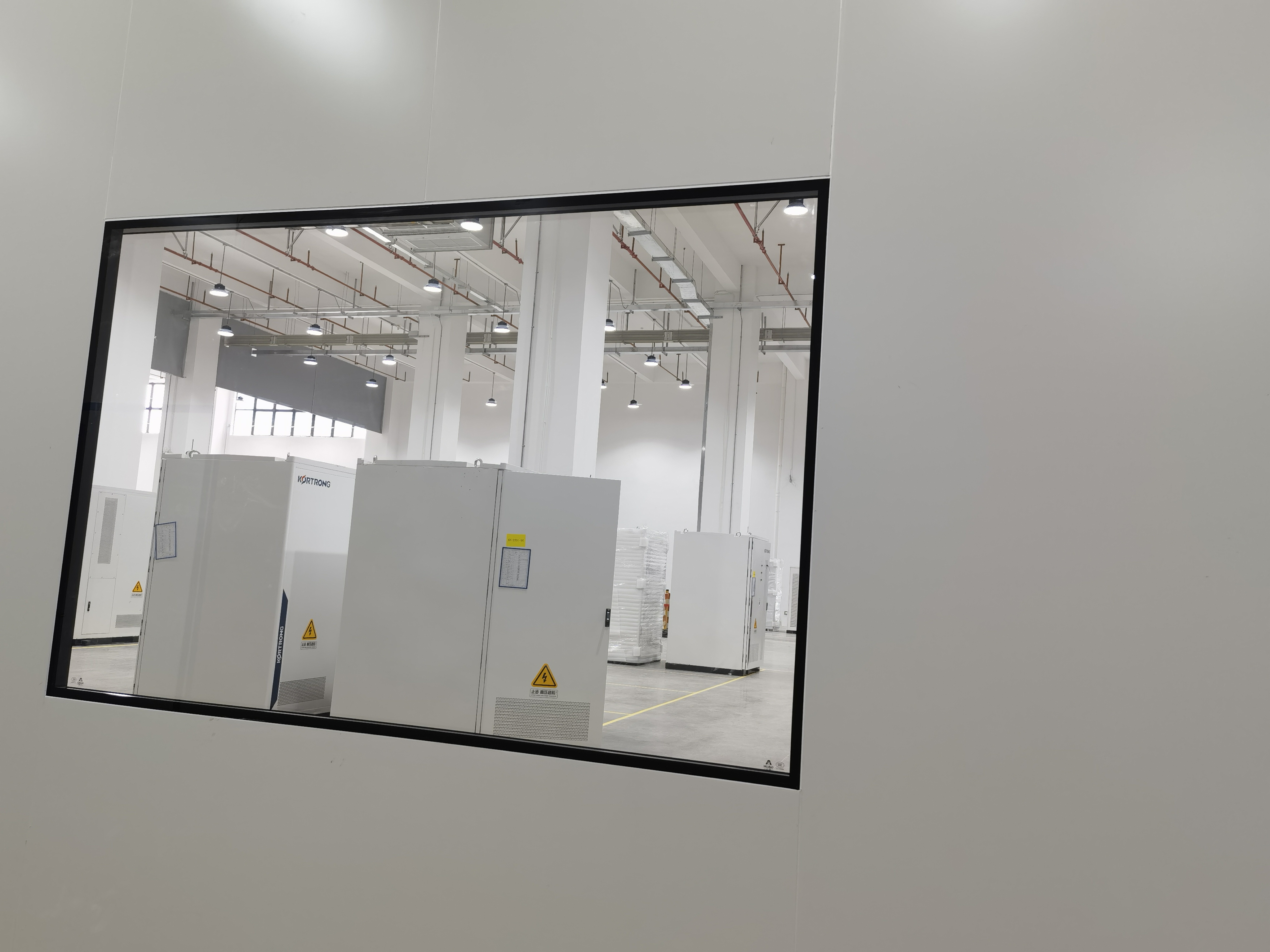
A cleanroom observation window may separate two spaces with different environmental conditions.
For example, one side may be maintained at a lower temperature than the other.
Even if both rooms are within their specified operating ranges, the temperature difference can influence the glass surface temperature.
A window that performs acceptably under one operating condition may develop condensation when room temperatures change.
This is particularly relevant in facilities where air-conditioning schedules vary between operating and unoccupied periods.
Relative humidity describes the amount of water vapor in the air relative to the maximum possible at that temperature.
It should not be interpreted independently of temperature.
Two rooms with the same relative humidity can have different dew points if their temperatures differ.
For troubleshooting, the engineer should record temperature and relative humidity on both sides of the window.
A single humidity reading taken in the corridor is insufficient.
Different glazing arrangements can produce different surface temperatures under the same conditions.
Glass configuration, frame construction and thermal connections all influence heat transfer.
However, a thicker window is not automatically more resistant to condensation.
The relevant performance depends on the complete assembly.
For a cleanroom retrofit, the selected window should be evaluated against the actual operating temperatures and humidity conditions.
The location of moisture provides an important diagnostic clue.
Before dismantling the window, determine whether the condensation is on an accessible surface or inside the glazing assembly.
If moisture can be removed by wiping the accessible glass surface, it is surface condensation.
This suggests that the glass temperature and adjacent air conditions should be investigated.
The cause may involve local cooling, elevated humidity or an unfavorable temperature difference.
The engineer should not immediately assume that the glass itself is defective.
Where a sealed multi-pane glazing unit is used, persistent fogging inside the sealed cavity may indicate a problem with the glazing unit.
The condition differs from ordinary surface condensation.
Cleaning the exposed glass will not remove moisture trapped inside the assembly.
The appropriate response depends on the glazing construction and the manufacturer's repair instructions.
For some sealed units, replacement of the glazing assembly may be necessary.
Condensation appearing mainly around the perimeter requires closer investigation.
Possible contributing factors include local thermal bridging, differences in frame temperature or air movement through an imperfect interface.
The pattern alone does not establish the cause.
The engineer should inspect the window frame, surrounding wall construction and relevant temperature conditions.
Water collected on the lower frame or adjacent wall may originate from condensation higher on the glass.
It may also indicate another moisture source.
The investigation should trace the water path before recommending repair.
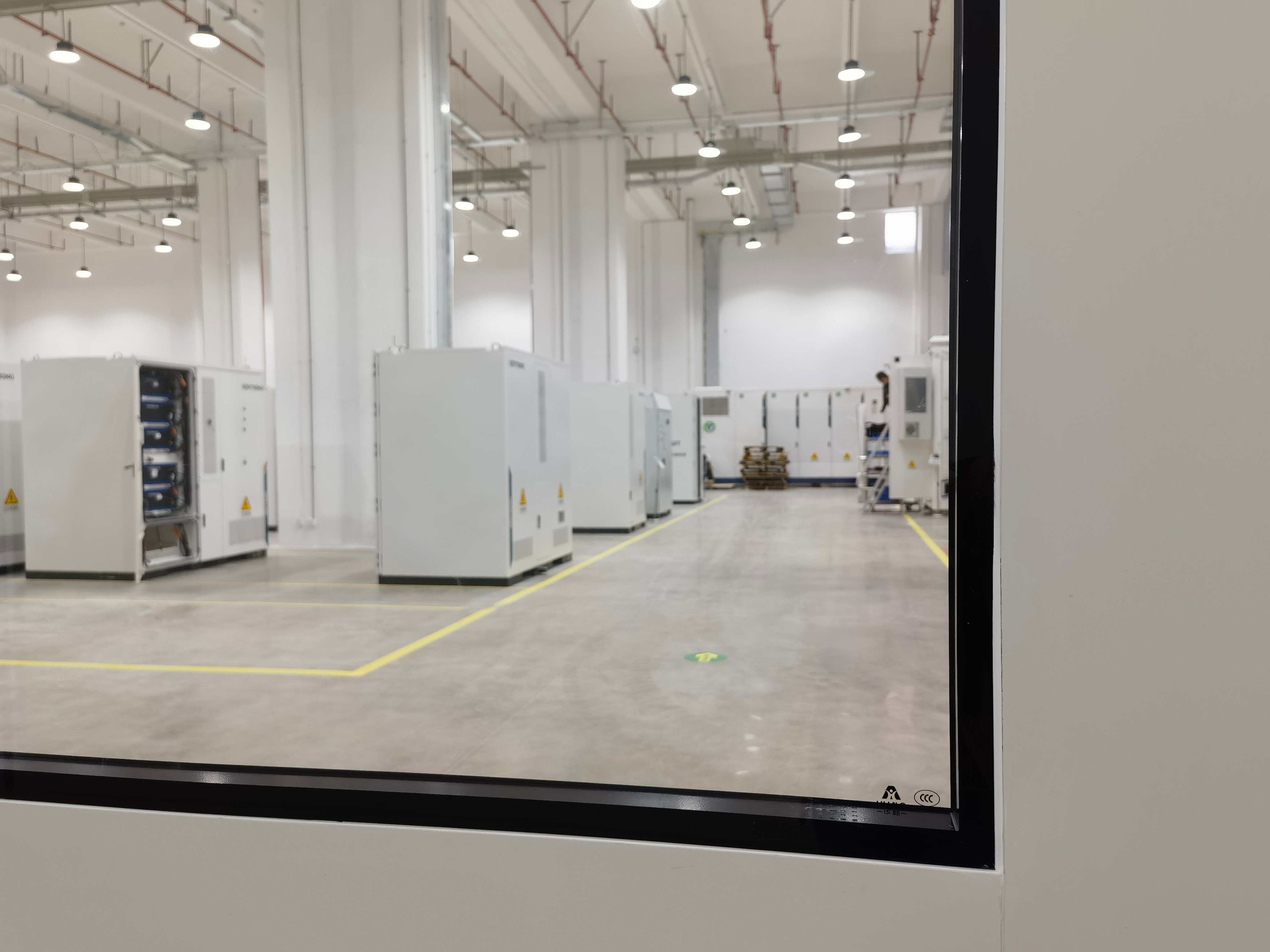
A visual inspection is useful, but environmental measurements make the diagnosis more reliable.
The objective is to establish whether the observed moisture is consistent with the operating conditions.
Measure the air temperature and relative humidity in the spaces separated by the window.
Record the measurements at the time condensation occurs.
Also note whether the HVAC system is operating normally.
A practical inspection record should include:
| Inspection Item | Information Required |
| Window identification | Room and window reference |
| Date and time | Inspection time |
| Room A temperature | Measured value |
| Room A relative humidity | Measured value |
| Room B temperature | Measured value |
| Room B relative humidity | Measured value |
| Glass surface temperature | Measured value and location |
| Frame surface temperature | Measured value and location |
| Moisture location | Surface, perimeter or glazing cavity |
| HVAC operating condition | Normal, reduced or abnormal |
| Pressure relationship | Project requirement and observation |
| Photographs | Moisture pattern and surrounding details |
The measured air temperature and relative humidity can be used to calculate dew-point temperature.
The engineer can then compare the dew point with the measured glass temperature.
This helps determine whether surface condensation is physically plausible under the recorded conditions.
Care is needed when measuring glass temperature.
Reflective surfaces can affect some infrared thermometer readings. An appropriate measurement method should be selected.
Condensation may appear only during specific operating periods.
For example, the problem may coincide with a change in room temperature or ventilation mode.
Record whether it occurs during start-up, full operation, cleaning or shutdown.
These observations can distinguish a persistent construction problem from a condition associated with HVAC operation.
Cleanroom pressure control is designed around the intended movement of air between spaces.
An unintended leakage path around a window can complicate the enclosure's performance.
Pressure differences do not automatically cause condensation, but they may influence the movement of moist air through gaps.
The mechanical engineer should review the pressure-control design before changing the window interface.
An observation window is installed within a larger wall system.
Its performance therefore depends partly on the surrounding construction.
The interface between the window frame and wall panel should follow an approved installation detail.
An incomplete connection may create gaps or other defects.
The inspection should consider the entire perimeter rather than only the visibly wet area.
Cleanroom walls may use different panel cores, framing arrangements and surface materials.
The appropriate window installation detail depends on the selected wall system.
A detail designed for one panel construction should not automatically be reused with another.
For modular walls, the panel opening, edge treatment and supporting arrangement must be coordinated.
Applying more sealant may conceal the visible gap without correcting the underlying problem.
For example, additional sealant cannot resolve a glazing unit whose internal seal has failed.
It also cannot compensate for an unsuitable thermal arrangement.
The contractor should identify the defect before selecting a repair material.
Window frames and adjacent joints are exposed to the facility's cleaning procedures.
The selected materials must be compatible with the intended cleaning agents and maintenance practices.
A repair that performs adequately during installation may deteriorate if material compatibility has not been considered.
Replacement is justified when the existing assembly cannot be repaired appropriately or no longer meets the project's requirements.
The decision should follow a documented technical assessment.
Persistent moisture inside a sealed glazing cavity may indicate that the glazing unit requires replacement.
The manufacturer should confirm whether repair is possible for the particular construction.
The project team should avoid dismantling a sealed assembly without an approved procedure.
Cracked glass, damaged frames or distorted components may require replacement.
The assessment should consider both safety and enclosure integrity.
The repair decision should not depend solely on whether the damage is visible from a normal viewing distance.
A cleanroom renovation may introduce new operating conditions.
For example, the room temperature, humidity requirements or cleaning procedures may change.
The existing window may need to be reassessed against those conditions.
However, a change in room classification does not automatically mean that every observation window must be replaced.
The decision should follow the approved design requirements.
If condensation returns after several repairs, the investigation should be expanded.
The problem may involve the HVAC system, wall construction or glazing selection rather than a localized seal defect.
Continuing to replace the same sealant without reviewing those factors can increase maintenance costs without resolving the cause.
A replacement quotation should describe the existing condition and the required installation interface.
A photograph and approximate opening size are not enough.
The supplier needs to understand the wall system.
Provide the wall thickness, panel construction and available opening dimensions.
Where possible, include the original window drawing.
If the existing drawing is unavailable, a site survey should establish the relevant dimensions.
The RFQ should include the temperature and humidity conditions on both sides of the window.
Also identify any unusual operating conditions that affect the enclosure.
This information is more useful than simply requesting an anti-condensation window.
The buyer should state the required visibility, safety, privacy and other project-specific characteristics.
If thermal performance is important, the specification should define the required performance and verification basis.
Do not assume that every cleanroom observation window offers the same glazing options.
The quotation should identify who is responsible for removing the existing window, preparing the opening, installing the replacement and completing the surrounding wall finish.
The contractor should also clarify whether the room must remain operational during the work.
For hospital and pharmaceutical facilities, shutdown and contamination-control procedures may affect the installation schedule.
Useful documents include the product drawing, installation detail, material specification and applicable test reports.
The required documentation should match the selected product and project.
A generic catalogue page is not sufficient evidence of every performance characteristic.
After installation, the project team should verify the work against the approved drawings and acceptance requirements.
Inspect the frame alignment, visible joints and surrounding wall finish.
Confirm that the installation has not damaged adjacent panels.
The completed surface should be consistent with the approved detail.
Check that the specified sealing treatment has been completed.
Where a performance test is required, use the approved test method and acceptance criteria.
Visual inspection alone should not be presented as proof of quantified airtightness.
If condensation was the reason for replacement, repeat the relevant environmental measurements under comparable operating conditions.
A window that appears dry immediately after installation has not necessarily demonstrated that the original problem has been resolved.
The evaluation should consider the conditions under which condensation previously occurred.
Record the installed window model, drawing revision, inspection results and relevant maintenance instructions.
This information helps the facility team distinguish future glazing problems from changes in HVAC operation.
Cleanroom window condensation should be treated as an enclosure and environmental-control issue until the evidence identifies a more specific cause.
The most useful sequence is to locate the moisture, measure the conditions, inspect the interfaces and then decide whether repair or replacement is appropriate.
Replacing components without identifying the cause can leave the original problem unresolved.
Condensation can occur when the glass or frame surface is colder than the dew-point temperature of the adjacent air. Temperature differences, humidity and window construction can contribute.
Persistent moisture inside a sealed glazing cavity may indicate a glazing-unit problem. Whether repair or replacement is appropriate depends on the actual construction and manufacturer instructions.
Sealant may address a specific joint defect when properly selected and applied. It will not necessarily resolve condensation caused by environmental conditions or a failed sealed glazing unit.
Record temperature and relative humidity on both sides, glass and frame surface temperatures, the moisture location and relevant HVAC operating conditions.
This may be possible, depending on the existing wall construction, frame arrangement and approved replacement method. The interface must be assessed before work begins.
 EN
 AR
 NL
 FI
 FR
 DE
 EL
 HI
 IT
 JA
 KO
 PT
 ES
 RU
 TL
 ID
 UK
 VI
 TH
 HU
 TR
 MS
 LA
 BN
 MN
 MY
 UZ
 KK

