 EN
EN
 AR
AR
 NL
NL
 FI
FI
 FR
FR
 DE
DE
 EL
EL
 HI
HI
 IT
IT
 JA
JA
 KO
KO
 PT
PT
 ES
ES
 RU
RU
 TL
TL
 ID
ID
 UK
UK
 VI
VI
 TH
TH
 HU
HU
 TR
TR
 MS
MS
 LA
LA
 BN
BN
 MN
MN
 MY
MY
 UZ
UZ
 KK
KK


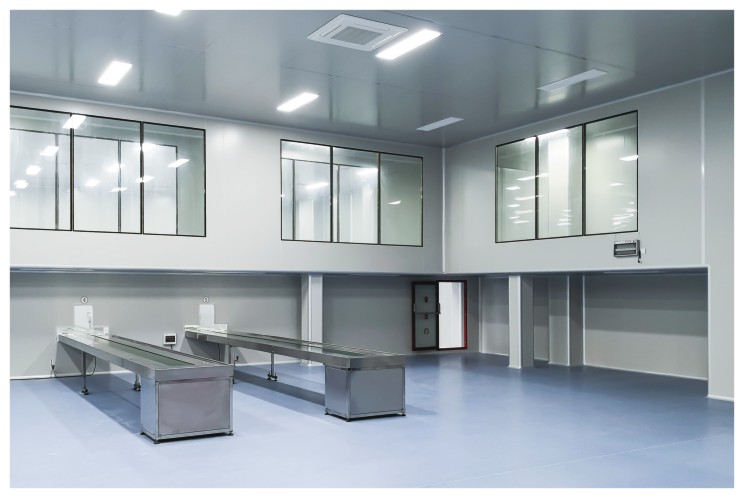
Doors are essential in cleanrooms, providing the means for differential pressure control and cleanroom zones to be isolated from the transfer of contamination, as tight as required. Airtightness testing of cleanroom doors ensures that doors perform as required in a pharmaceutical plant, medical devices production or electronics assembly. Learn about available cleanroom door testing solutions facility managers and engineers need to understand available testing methods to measure and improve cleanroom door airtightness.
Why Airtightness Testing Matters
Air leakage testing is used on clean room doors and can be observed. You can know what is its. Disease can be prevented from escaping your cleanroom through your cleanroom door with pressure. If the biosafety level 2 or 3 is not on well, it may contaminate you and the community; If pharmaceutical facility is not on well, it may be failed quality test and be violated by regulation.
Failing to seal can have serious consequences. Research has shown that gaps around the door can be leakage points and may adversely affect containment. For example, in BSL-3 laboratories, a leakage area of only 0.04 square meters at an airflow rate of 540 CMH yielded a pressure differential of -17.75 Pa and a leakage area of 0.08 square meters at an airflow rate of 540 CMH yielded a pressure differential of -3.04 Pa. This dramatic pressure differential reduction provides an example of how containment integrity can be compromised by failures that are not necessarily large.
Common Testing Methods
There are many different standard testing methods used to test cleanroom door airtightness, each with varying degrees of accuracy and for various applications.
The most common is Pressure Decay Testing. The chamber is closed around the door and filled with air to a specific pressure, usually 50 Pa or 100 Pa. The pressure loss is measured as a function of time and the leakage rate is computed from the rate of pressure loss. This technique gives quantitative information about air flow through the door seal.
Smoke Testing is a visual method of leak testing. The smoke is blown close to door edges to seek out leaks and is effective in pinpointing seal trouble and to educate personnel. This method, however, is less sensitive to small air leakage than pressure based methods.
Air Tightness Testing with special test equipment is used to measure the air leakage at door seams. It is regarded as the most reliable approach to the detection of sealing problems and can detect small leakages and possible failure of the sealing in cleanrooms with special requirements.
Leak Rate Testing with calibrated flow meters is a test of the air leakage rate through the door seal under a specific pressure difference. This approach measures the leakage in cubic metres per hour or in litres per second, giving a set of objective performance figures.
Testing Instruments and Technologies
Precise instrumentation is a key to accurate airtightness testing. Pressure measurement devices such as pressure gages and differential pressure transducers are important instruments, because they are used to track pressure as they test. In high precision environment helium mass spectrometer can be used for ultra sensitive leak detection, the detection limit is as low as 1×10⁻⁹mbar·L/s. Routine testing can be done quickly and non-destructively with a portascanner® AIRTIGHT ultrasonic leak detection device to detect and measure even the smallest leaks (0.5mm) at the port or location.
Test to use, will be affected by the clean room type and performance requirements. Clean room ISO Class 7-8 would probably demand leakage performance of Class 6 or higher or 1.5 m/m.h and likely aseptic core spaces would require Class 7 or higher.
Standards and Compliance Requirements
Cleanroom door performance must be verified by compliance with set standards. Important standards include ISO 14644-1: Cleanroom classification, which frequently incorporates the requirements for airtightness testing. According to the German VDI 2083 Blatt 19 standard several tests and classification of the air tightness of containments such as cleanrooms and components are defined.
Other relevant standards are ASTM E284 for air leakage measurement, EN 12207 for airtightness grading and ISO 12964 for air leakage through doors and windows. USP Chapter 797 also sets standards for air barrier integrity for pharmaceutical applications. Most certification bodies like UL and TÜV will require a documented test result from an accredited laboratory.
Conclusion
Performing Airtightness test of a clean room door is to ensure the cleanroom doors meet the requirement of keeping cleanroom isolated to prevent contamination of contamination. Pressure decay test, smoke test, air tightness testing are some of the tests conducted with different level of accuracy to select according to the purpose to test airtightness. To test if clean room doors satisfy specific regulations, test performance and comply with standards such as the ISO 14644 and VDI 2083 can be performed by facility managers. Guangdong Huaao Clean Room Door Co., Ltd. is the manufacturer of clean room doors with high air tightness in all the pharmaceutical, health care and electronics industries.
