 EN
EN
 AR
AR
 NL
NL
 FI
FI
 FR
FR
 DE
DE
 EL
EL
 HI
HI
 IT
IT
 JA
JA
 KO
KO
 PT
PT
 ES
ES
 RU
RU
 TL
TL
 ID
ID
 UK
UK
 VI
VI
 TH
TH
 HU
HU
 TR
TR
 MS
MS
 LA
LA
 BN
BN
 MN
MN
 MY
MY
 UZ
UZ
 KK
KK


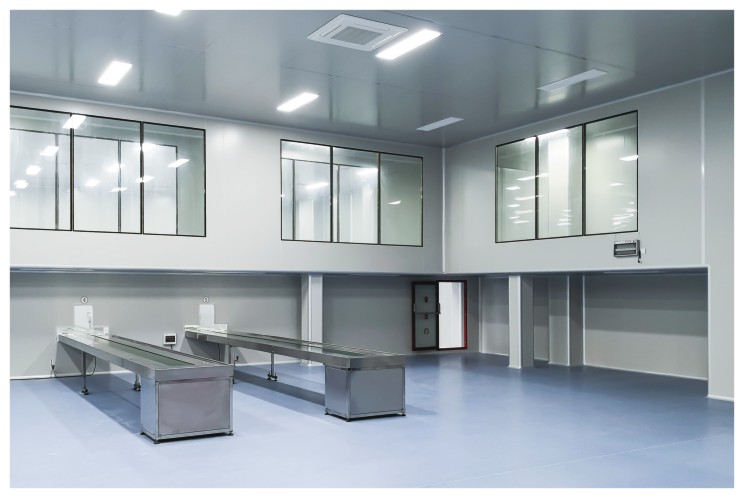
The most commonly touched (and overlooked) area regarding cleanroom Infection Control issues, is the door face within the hospital cleanroom and in Healthcare Settings. Door handles, push plate and the face of the door are all touch points with the outside world and potentially harbor MRSA, C. E. And C. difficile, The Clean Room Door solution that provides a perpetual and effective layer of added defense to your cleanroom is applying anti-bacterial coatings to the clean room doors.
How Anti-Bacterial Coatings Work
Anti-bacterial coatings use a number of mechanisms to help reduce microbial bioburden on the surface of doors. Commonly-used technologies are silver ion and copper-based formulations.
And this silver-ion technology can come in two flavors: either killing the silver ions which prevent cell growth like here at Johnstone's with their Microbar coatings, or binding to them. Johnstone's coatings have proven efficacy and duration on MRSA and E. coli and are "proven active."
Copper-based coatings have a very fast antimicrobial property. Studies have shown that nano-structured copper coatings can provide a high level of bacterial reduction in just 15 minutes after contact and some formulations have been shown to be highly active against all ESKAPE pathogens. Copper alloy surfaces have produced significant antibacterial properties with performance better than stainless steel surfaces against S. aureus and E. coli. The antimicrobial mechanism relies on the release of copper ions that have the ability to disrupt the cell walls of bacteria, leading to the leakage of ions and metabolites, and interruption of intracellular processes.
Another strategy involves the use of photocatalytic coatings that incorporate materials that react to light to kill microbes. In the case of cleanroom door applications, these coatings are applied to the glass vision panels and in this way they are giving transparent surfaces antimicrobial properties.
Efficacy and Testing Standards
The anti-bacterial ability of hospital clean room door coatings should be verified using a test procedure. An internationally recognized test method, JIS Z 2801:2000, assesses the antibacterial activity on a coated surface. The products that meet this standard have proven to achieve a reduction in bacteria to below the level of detection within 24 hours.
Real life validation of anti-bacterial coating effectiveness has been given through in situ hospital studies. The coated high-touch areas in active hospital settings had a 44% reduction in the number of colony forming units recovered compared to uncoated surfaces. The effectiveness of these treatments is dependent on site-specific bioburden levels; maximum reductions were seen in the toilet exit where bioburden was highest.
In the case of cleanroom doors, anti-bacterial powder finishes are available that can eliminate over 99% of all bacteria including MRSA, Salmonella, E. coli and C. difficile. They can be used to coat the faces of doors, doors access panels, and hardware for complete protection against antimicrobial activity.
Compatibility with Cleanroom Design Requirements
Anti-bacterial coatings for cleanroom doors must complement existing cleanroom design requirements, including cleanability, durability, and regulatory compliance.
Surface finish is extremely important. Coatings should offer a smooth, non-porous surface that can be easily cleaned and disinfected, and should not be degraded by the disinfection process. Door designs that are flush glazed have anti-bacterial coatings that get rid of any ledges or crevices where particles can build up which allow for a thorough cleaning of the door.
They need to be built to last . Cleanroom doors are washed down a number of times a day with robust disinfectants. In fact, it's the combination of a high performance coating (such as polyester powder coatings, often incorporating silver ion technology) which has to withstand frequent disinfection whilst retaining its antimicrobial properties - after all, a hardwearing antimicrobial coating has a better chance of a long life in critical environments like healthcare.
Aesthetic factors also should be taken into account. Antimicrobial coatings have created problems that have been cited as promoting "dirty looks" that may have compromised user behaviour and cleaning practices. Manufacturers are still making formulations to clean the mantel and have an antimicrobial effect.
Selection and Installation Considerations
The utility of certification, testing is key. Indicate products with third party testing against relevant pathogens such as MRSA, E. coli and C. difficile. There are standards that give reliable benchmarks for performance: JIS Z 2801:2000 and BS EN 1026:2000.
Decisions regarding which coating to use should depend on where the surface will be applied. For example, to ensure short kill times copper alloy coatings would be suitable for door handles and push plates, whilst silver ion coating powder could be better suited for large surface areas of the door face because it covers bacteria, viruses, and fungi but wouldn't change the appearance of the product.
It is critical to integrate with door systems. Exhibiting anti-bacterial properties, cleanroom doors specified with anti-bacterial coatings from Guangdong Huaao Clean Technology Group Co., Ltd. can be specified as part of a complete solution, which incorporates compatibility with the necessary door materials, sealing systems and cleanroom classification.
Conclusion
When it comes to controlling infections, antibacterial coatings for clean rooms are one of the most practical solutions. They're an active method for killing bacteria on high-contact surfaces. It's all about finding solutions that are both effective, and appropriate for use in the cleanroom environment, so your medical center can meet those critical standards of care and protect patient well being. Reach out to Guangdong Huaao Clean Technology Group Co., Ltd. to learn how you can leverage antibacterial coated cleanroom doors in your anti contamination strategies.
