 EN
EN
 AR
AR
 NL
NL
 FI
FI
 FR
FR
 DE
DE
 EL
EL
 HI
HI
 IT
IT
 JA
JA
 KO
KO
 PT
PT
 ES
ES
 RU
RU
 TL
TL
 ID
ID
 UK
UK
 VI
VI
 TH
TH
 HU
HU
 TR
TR
 MS
MS
 LA
LA
 BN
BN
 MN
MN
 MY
MY
 UZ
UZ
 KK
KK


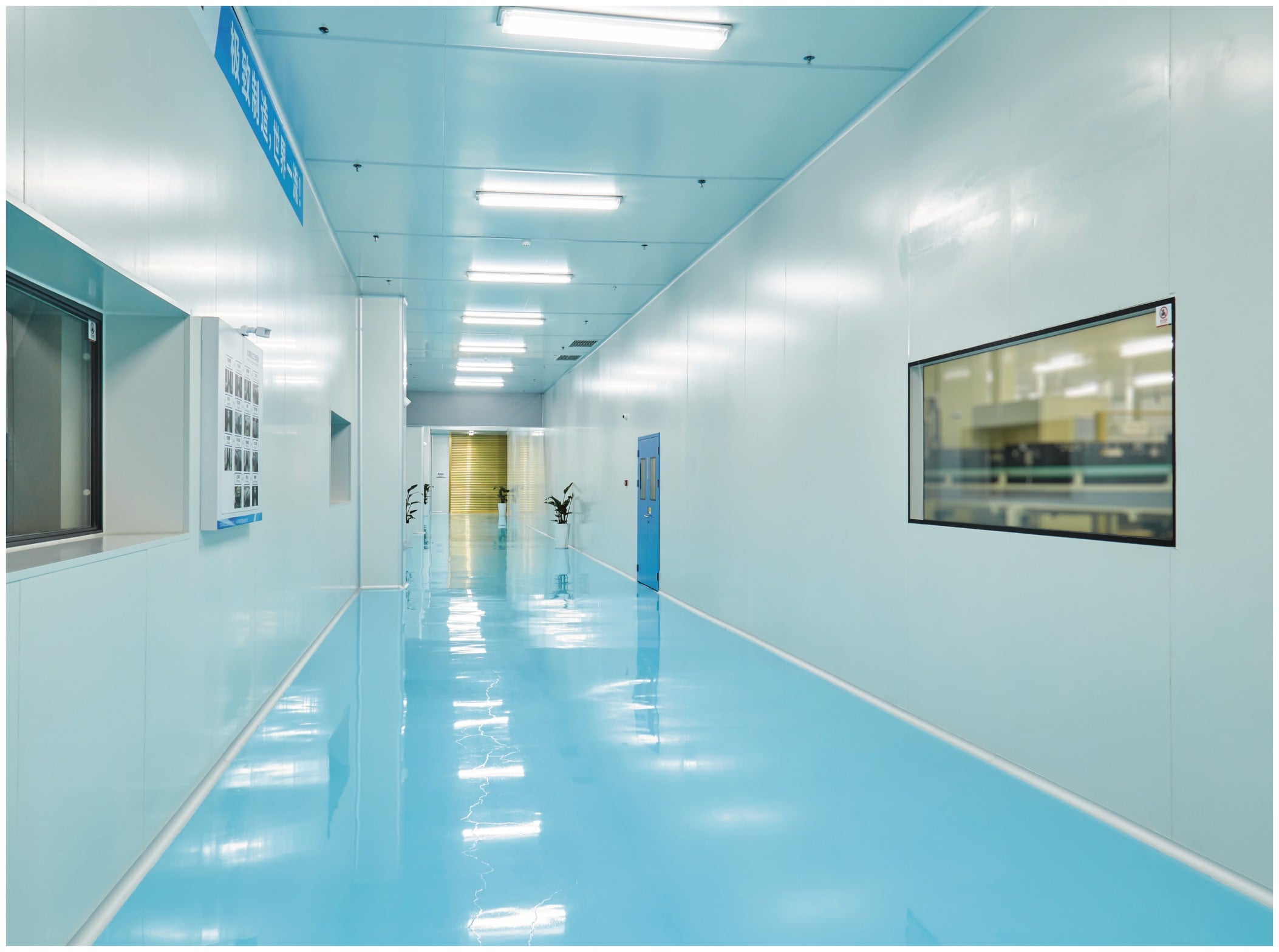
Doors have an important role in a cleanroom environment, as they help to preserve the environmental integrity of a cleanroom. The performance of a cleanroom door is directly related to its thickness and structure, such as its insulation, fire resistance, air tightness and durability. These technical characteristics are important for facility managers and engineers to be familiar with when it comes to the selection of doors for particular cleanroom applications. Guangdong Huaao Clean Technology Group Co., Ltd. is a national high-tech enterprise that provides full cleanroom solutions, and can provide doors according to the needs of various industries.
Standard Door Thickness and Its Impact on Performance
Cleanroom doors are available in a range of thicknesses, typically from 50mm to 150mm. These factors such as cleanroom classification, application, and specific performance requirements determine the thickness selected.
The thinner type of doors, usually between 40mm and 50mm thick, will be adequate for ISO Class 7 and 8 cleanrooms that have moderate temperature requirements. They provide a compromise between strength and cost, and are suitable for general manufacturing applications. But they offer less insulation and soundproofing as compared to thicker ones.
The most popular specification for cleanrooms with a requirement of 23°C ± 2°C temperature and 55% ± 5% humidity is standard 50mm doors. The main component, which is usually a rock wool or honeycomb paper, acts as an insulating and fireproofing material. These doors are suitable for achieving pressure and sealing at 50mm thickness.
In controlled environments which have more exacting temperature specifications, e.g. 23°C +/- 1°C, with humidity at 50% +/- 5%, thicker doors (75mm to 150mm) are required. In cleanrooms that must maintain a humidity of 45% ± 3% and a temperature of 23°C ± 0.5°C, thicker insulated panels (100mm) are employed, or double layer panel structures. For extreme applications, where temperatures are required to be maintained at 23°C ± 0.1°C and humidity 40% ± 2%, 150mm panels with extra-thick insulation is required.
Core Materials and Structural Composition
The door structure that plays a crucial role in the performance of cleanroom doors is the core material. Common core materials are insulating rock wool, honeycomb paper, and solid polyurethane foam.
Rock wool core is a material used extensively in the manufacture of cleanroom doors of fire resistance. It offers very good thermal insulation and the ability to resist high temperatures up to 650°C. Rock wool cores have a good sound absorption ratio and do not burn, which is appropriate for the application that has high fire resistance. Rock wool cores, however, may not be the materials of choice where fiber shedding is a problem.
For cleanrooms with lower level of structural and fire-rating requirements, honeycomb paper core is a lightweight and economical material choice. It offers a compromise of weight and performance for non-fire rated applications. Honeycomb core doors are easier to install and operate, in addition to being very strong for their weight.
Polyurethane foam core has excellent insulating characteristics and is generally utilized in applications with temperature control requirements. They are uniform in insulating property and dimensional stability. PUR core Doors are lighter than Rock wool type doors, which helps to lighten the load on the hinges and operators.
Fire-resistant doors, constructed with mineral wool or rock wool cores in thicknesses of 50mm or 100mm, can achieve 120-minute fire resistance. For standard cleanroom applications, 50mm-thick rock wool cores provide excellent thermal insulation and soundproofing while maintaining structural integrity.
Structural Features and Their Functions
In addition to thickness and core composition, cleanroom doors have certain structural properties that improve performance.
High quality cleanroom doors are often double wall. The door is made of metal sheet panels (such as galvanized steel, stainless steel, aluminum or pre-painted steel) on both sides and a core material between them. The sandwich-like design gives outstanding strength to weight ratios and thermal performance.
Pressurization is crucial and requires air-tight sealing systems. Modern clean room doors have an additional seal in the middle and have special lower seals to keep particles out of the room. To make good airtight seals, pneumatic bulb seals, flat-bulb seals triggered by pressure or magnetic strips are included in the door design.
Observation windows are sometimes built into the structure of doors. The windows are generally double sided and are usually made of tempered glass to give visibility whilst keeping the integrity of the environment. The vision panel frames are designed so that they sit flush with the door surface, and do not have ledges where contaminants may accumulate and cause problems, and also facilitate easy cleaning.
Customization and Application-Specific Options
Cleanroom applications vary from one another and so do the configurations of the doors. Cleanroom doors can be designed with customized vision panels, access doors and seals to meet the specific requirements. Modular door systems can be customised for size, surface finishes and can be integrated with automatic door operators. Huaao provides doors up to 2000mm wide, 3000mm tall to suit different cleanroom configurations and equipment access.
Surface treatments include electrostatic spray (powder coating), PVDF coating, PVC film coating, and anti-bacterial paint, which can be used to meet cleanability, durability, and aesthetic needs. The door frame and hardware should comply with the pressure differential and cleaning requirements as well as any regulatory standards of the cleanroom that it is intended for.
Guangdong Huaao Clean Technology Group Co., Ltd. has six factories to supply the cleanroom doors of various thicknesses and structures to customers around the world. Contact us about your particular needs and determine the best door solution for your cleanroom facility.
