 EN
EN
 AR
AR
 NL
NL
 FI
FI
 FR
FR
 DE
DE
 EL
EL
 HI
HI
 IT
IT
 JA
JA
 KO
KO
 PT
PT
 ES
ES
 RU
RU
 TL
TL
 ID
ID
 UK
UK
 VI
VI
 TH
TH
 HU
HU
 TR
TR
 MS
MS
 LA
LA
 BN
BN
 MN
MN
 MY
MY
 UZ
UZ
 KK
KK


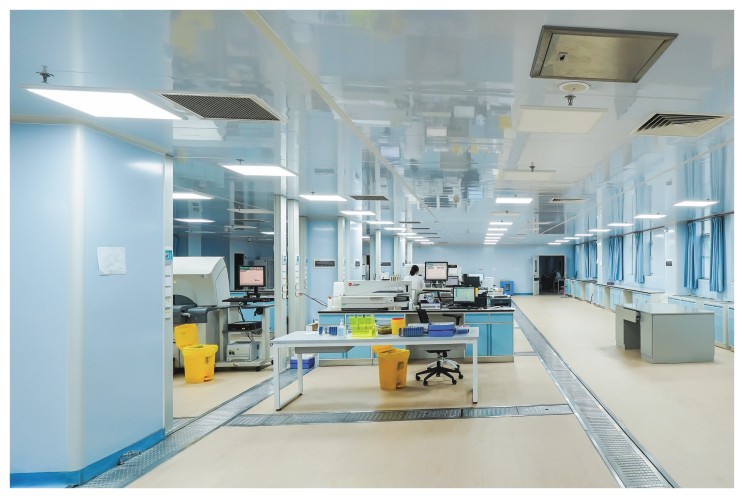
The right door system can be a difficult decision to make during the initial design of your cleanroom. These doors act as part of your cleanroom barriers, serving not just as entry and exit points, but also to generate pressure differentials, block contamination and help you meet compliance standards. Whether you opt for a sliding or swing door will affect your room's square footage, as well as the room's airflow, workflow and cost. However, in the pharmaceutical, electronics and healthcare industries, it is important to understand your trade-offs.
Space Efficiency and Layout Optimization
Every square meter of cleanroom space is a costly resource. Sliding doors slide on overhead rails that open to the side so they do not take up room in a room. In modular cleanroom designs, where space is constrained, this type of design will save about 10-15 percent on floor space in comparison with swing doors. The track tops the floor and maintains a smooth and uninterrupted surface to facilitate easier cleaning and meet Good Manufacturing Practice standards (GMP).
For comparison, swing doors open only towards one side and have to swing all the way. This swing path can be a space issue in a compact cleanroom system and may make it complicated to design the layout. For facilities that have plenty of room or have lower trafficrooms,swing doors are a viable and simple solution.
Airflow Integrity and Contamination Control
It is extremely important to maintain positive pressure and keep particle disturbance to a minimum in cleanrooms. Sliding doors disturb the air much less when opening and closing. Research shows they create as much as 70 per cent less turbulence in the air than do swing doors, thus maintaining HEPA filtration and preventing cross contamination. In ISO-classified and GMP-compliant settings, the consistent pressure cascades of hermetically sealed sliding models with airtight gaskets are essential.
However, when opened (as is the case during swing doors), the doors suck up air currents that may facilitate the entry of dust and microorganisms to the sterile areas. This turbulence can disrupt airflow, causing problems in controlled environments, and swing doors are not ideal for high-grade pharmaceutical and biotech cleanrooms.
Hygiene, Cleanability, and Maintenance
Cleanroom doors need to be able to withstand harsh cleaning procedures, such as regular sanitization and chemical disinfecting. Sliding doors come with flush and seamless surfaces and recessed hardware, which prevent particle accumulation on ledges and in crevices. Designs with completely sealed sliding rails and hidden control components further reduce contamination risks.
There are hygienic swing doors as well; with metal surfaces and EPDM seals that make for an airtight closure. Their hinge may be more difficult to clean properly, however, and they need frequent lubrication and maintenance. Sliding doors are usually easier to clean in high-risk areas, like a pharma aseptic processing area.
Cost, Accessibility, and Application Suitability
While sliding doors can be slightly more expensive to purchase initially-given the complexity of the tracking system and the need for automation and custom fitting-the added cost is worth it in the long run in the form of lowered energy usage ( due to efficient air sealing and the need to remove fewer items from circulation, reducing load on the HVAC ), and easier accessibility for equipment or wheelchairs that need to pass through on a regular basis, as in the tight quarters of a cleanroom hallway.
Swing doors are more cost-effective initially, costing approximately 20 to 30 percent less than sliding systems. They install faster and are simpler to maintain, making them suitable for lower-traffic areas, storage rooms, and retrofits where space is not a constraint. For emergency exits, swing doors offer straightforward egress.
Conclusion: Matching Door Type to Cleanroom Requirements
What will help with this is the fact that for high level pharmaceuticals, biotech, or electronics cleanrooms that require good air change rates, negative pressure and integrity across pressure cascades sliding doors are more effective, the price differential on these doors is greater, but these are very expensive.
Swing doors remain a viable and cost-effective choice for ISO Class 7–8 areas, support zones, and applications with lower traffic and less stringent contamination control requirements.
Guangdong Huaao Clean Technology Group Co., Ltd provides you full selection of clean room doors and panels for your facility. Contact us for your clean room door solutions now.
